How Much Does a Large Outdoor Sculpture Cost?
There is no reliable fixed price per meter for a custom large outdoor sculpture. A useful budget depends on design maturity, geometry, material, internal structure, finish, segmentation, packing, destination and installation responsibility.
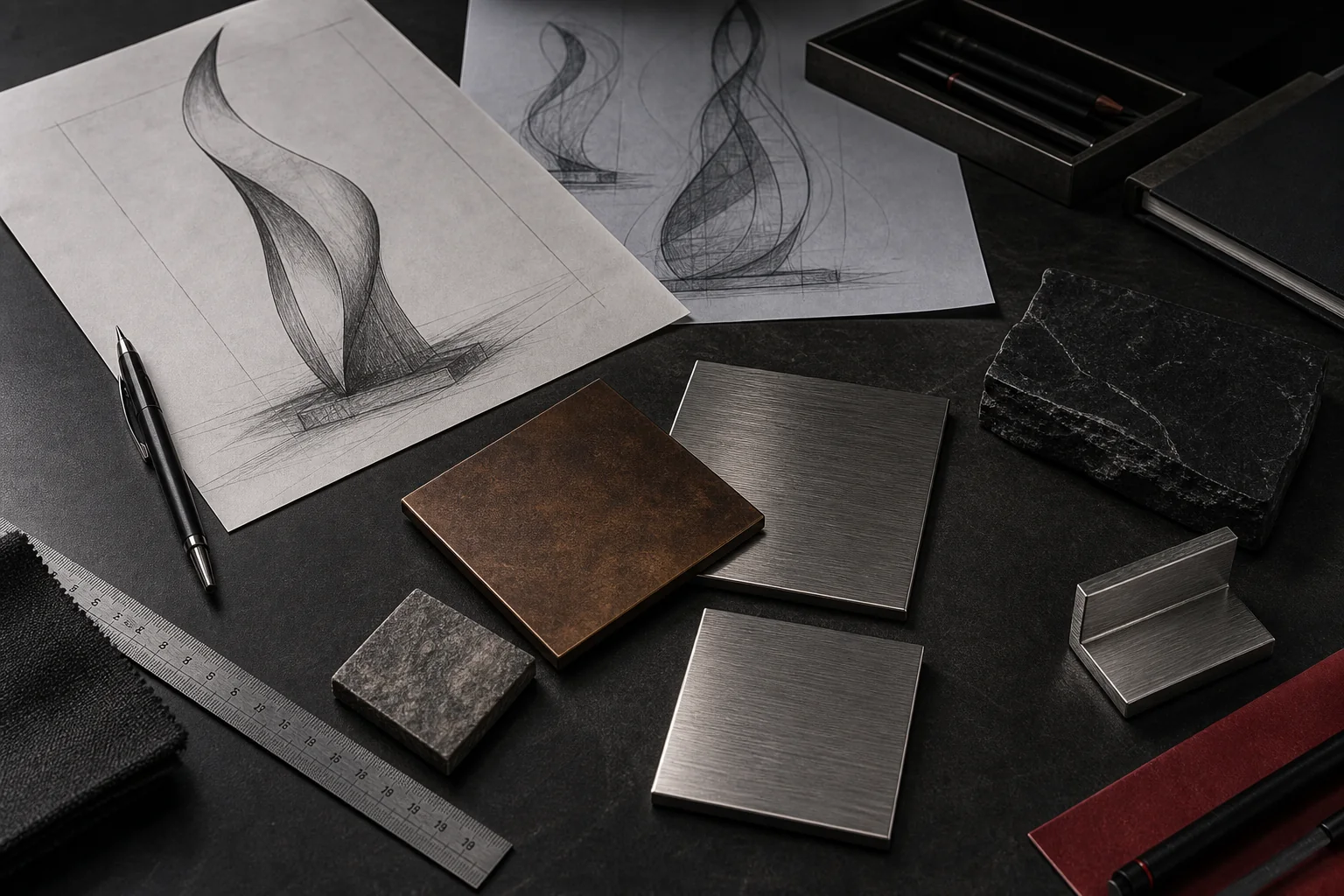
A large sculpture price is the result of a project route, not a catalog rate. Two works with the same height can have very different costs because one may be a compact corten form on a prepared base while the other is a cantilevered 316L stainless landmark with controlled reflection, segmented export packing and crane-assisted installation.
This guide is for hotel owners, resort developers, architects, landscape designers and public-space teams preparing a custom outdoor sculpture budget. It does not publish invented price ranges. Instead, it shows which decisions change a quote and which facts a supplier needs before a budget becomes useful.
Define the object
Confirm design status, dimensions, geometry, material and finish before treating a number as comparable.
Define delivery
Separate fabrication, structure, packing, freight, foundation, lifting, assembly and touch-up responsibility.
Define evidence
Request drawings, samples, workshop records and construction checkpoints that match the quoted scope.
Quick answer: what changes the cost of a large outdoor sculpture?
Nine groups usually control the quotation: design development, size and geometry, material specification, internal structure and base, surface finish, segmentation and trial assembly, quality records, export packing and freight, and site installation. A quote becomes more reliable as these decisions move from assumptions to drawings and written scope.
That is why a fixed price per meter is weak. Height does not describe cantilever, surface area, repeated parts, compound curves, polishing access, wall thickness, frame density, weld control, crate count or lifting sequence. These are the elements that often change workshop hours and delivery risk.
1. Design maturity changes how much uncertainty the supplier must price
A reference image, a concept sketch, an approved 3D model and a production-ready drawing are four different starting points. If the form is still changing, the quotation needs to state the number of design rounds, modelling scope, sample process and approval method. Without that boundary, revisions can become an unplanned cost after contract.
For a site-specific commission, the studio should also understand approach direction, viewing distance, architecture, planting, water, night lighting, public touch and maintenance access. These facts can change proportion, base, finish and material before fabrication begins.

2. Size matters, but geometry matters more than one dimension
Overall height is only the first scale fact. Width, depth, surface area, wall thickness, open voids, repeated members, cantilever length and center of gravity influence fabrication and handling. A compact five-meter form and a five-meter winged form may need different frame density, jigs, lifting points, temporary support and site access.
Buyers should provide a dimensional envelope and intended viewing distance, not only a desired height. If the form sits in a porte cochere, shallow pool or narrow arrival court, the available crane position and assembly zone may affect segmentation before the artistic form is final.
3. Material cost includes processing, finish and exposure
Stainless steel, bronze, corten, stone and hybrid systems carry different fabrication routes. Material grade is only one line. Forming, casting, carving, welding, grinding, polishing, patina, coating, stone support, drainage and maintenance access all contribute to the delivered result.
For stainless steel, coastal salt, pool chemicals and cleaning practice influence whether 304 or 316L is appropriate. The 304 vs 316L decision guide explains why grade should follow exposure rather than a generic premium label. For broader comparison, review 316L stainless steel vs bronze vs stone.
4. Internal structure, base and anchors are part of the sculpture budget
A large outdoor form must transfer its weight and environmental loads into a base that the site can build. The quotation should identify the supplier's structural boundary, frame assumptions, base plate or embedded connection, anchor information, lifting points and the information required from the local engineer.
Local foundation design may remain outside the sculpture supplier's scope because soil, drainage and local codes belong to the site. It should still be coordinated early. The foundation and anchor checklist helps separate sculpture-side information from local civil responsibility.
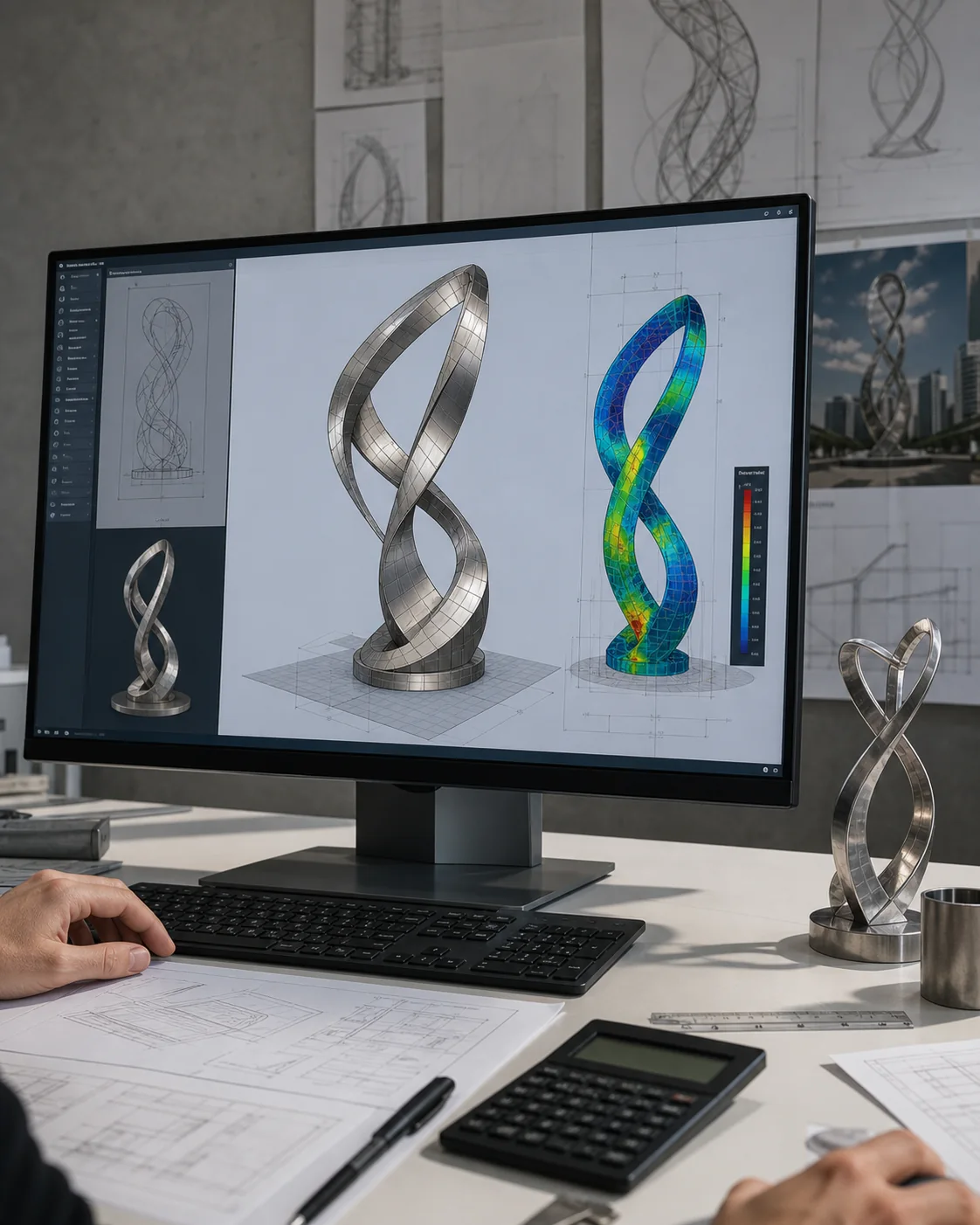
5. Surface finish can be a major workshop cost
A brushed directional finish, mirror polish, controlled bronze patina or hand-worked stone texture requires a defined standard and approval process. Complex geometry can make finish access difficult, and a reflective surface can reveal distortion or inconsistent weld correction that a matte finish would hide.
Ask whether the price includes physical samples, mockups, agreed viewing distance, final cleaning, protective wrapping and site touch-up instructions. A finish correction after export is usually harder than correcting it before packing.
6. Segmentation links fabrication cost to freight and installation
Large sculpture is often divided for workshop access, container limits and site lifting. Each split affects joint design, trial assembly, surface continuity, crate size, erection sequence and final touch-up. Fewer pieces can reduce site joints but increase crate and lifting requirements; more pieces can simplify transport but add assembly work.
The useful question is not simply whether the work can fit a container. It is whether the segmentation preserves the form and finish while matching the site's receiving and crane plan.
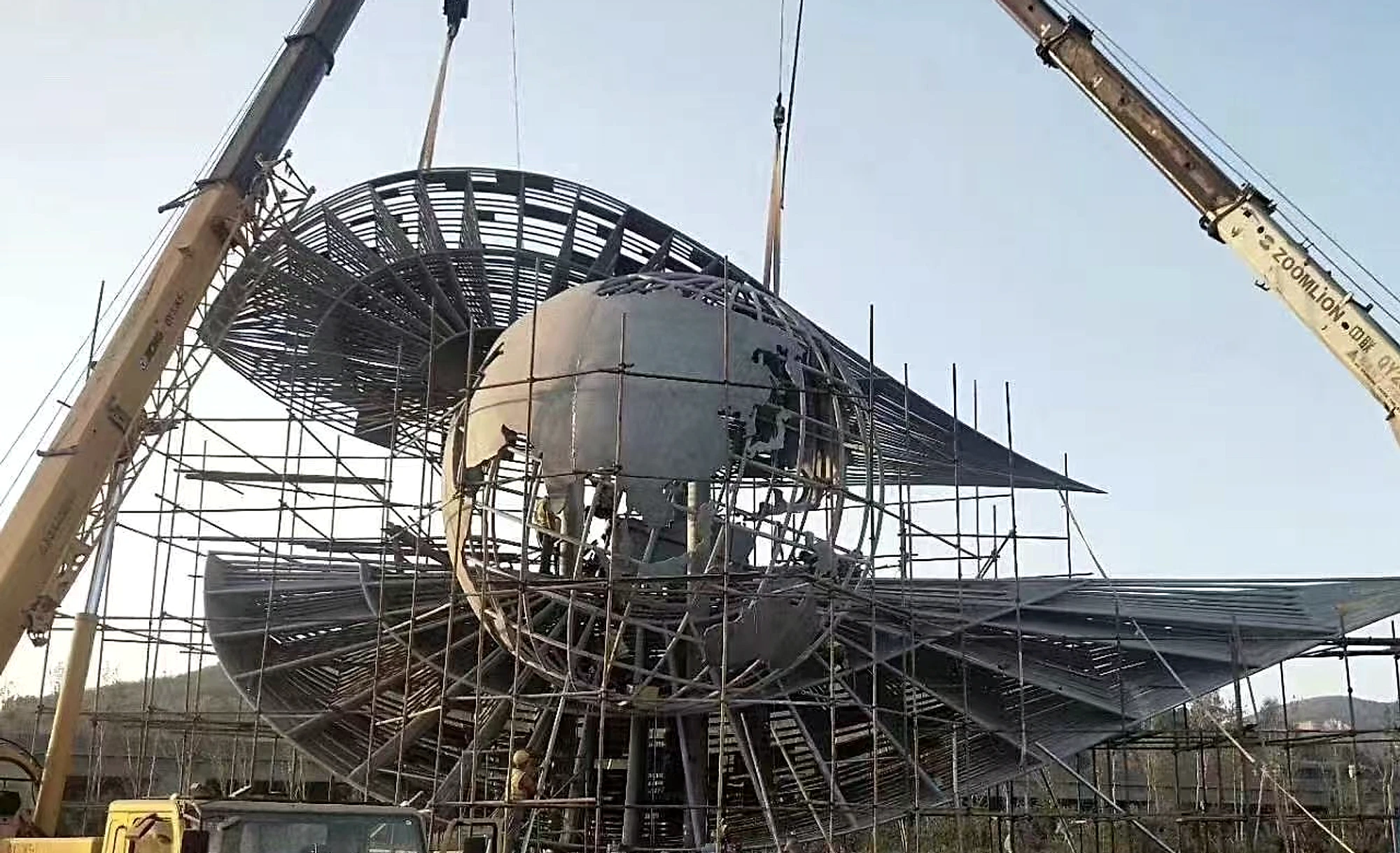
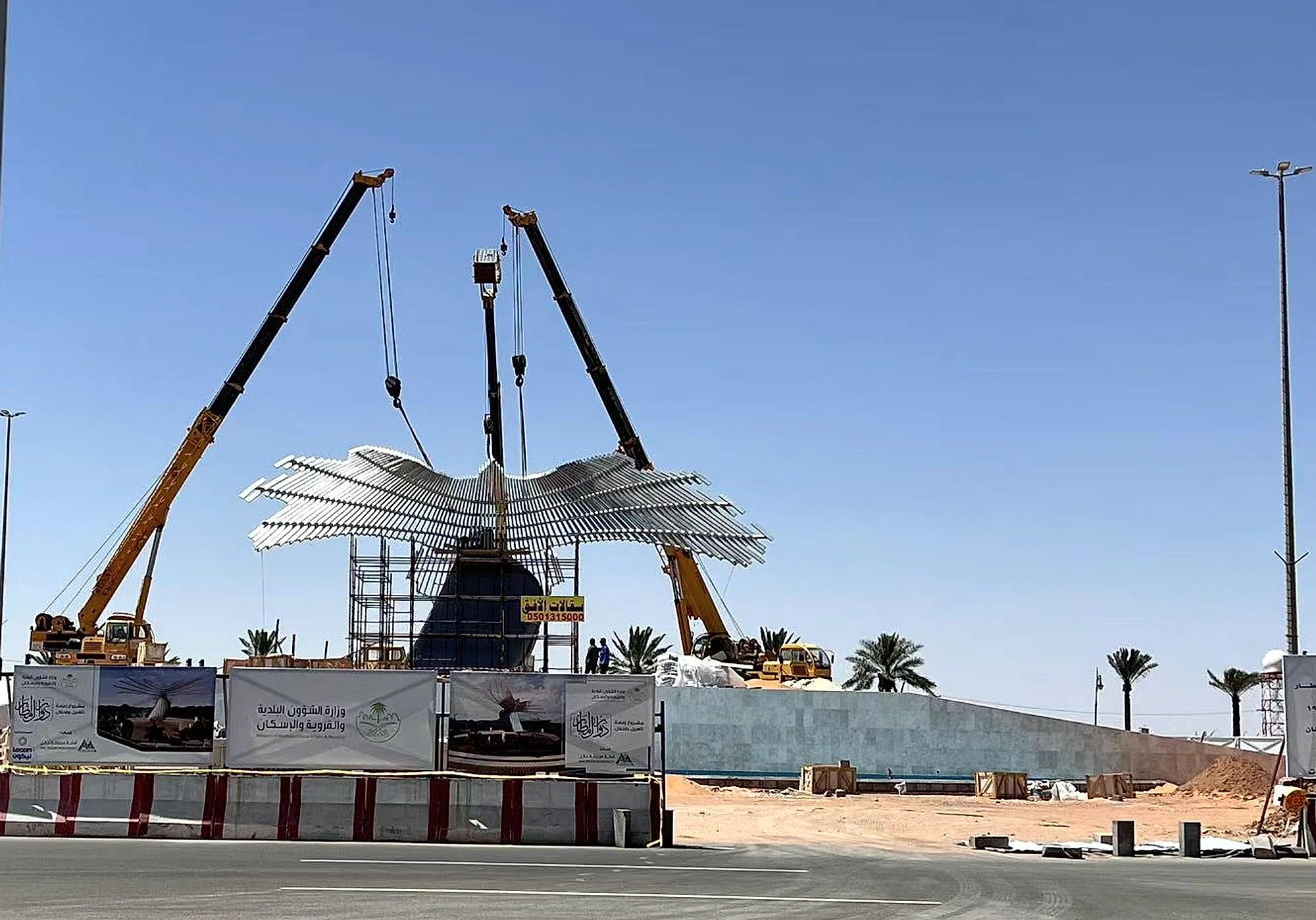
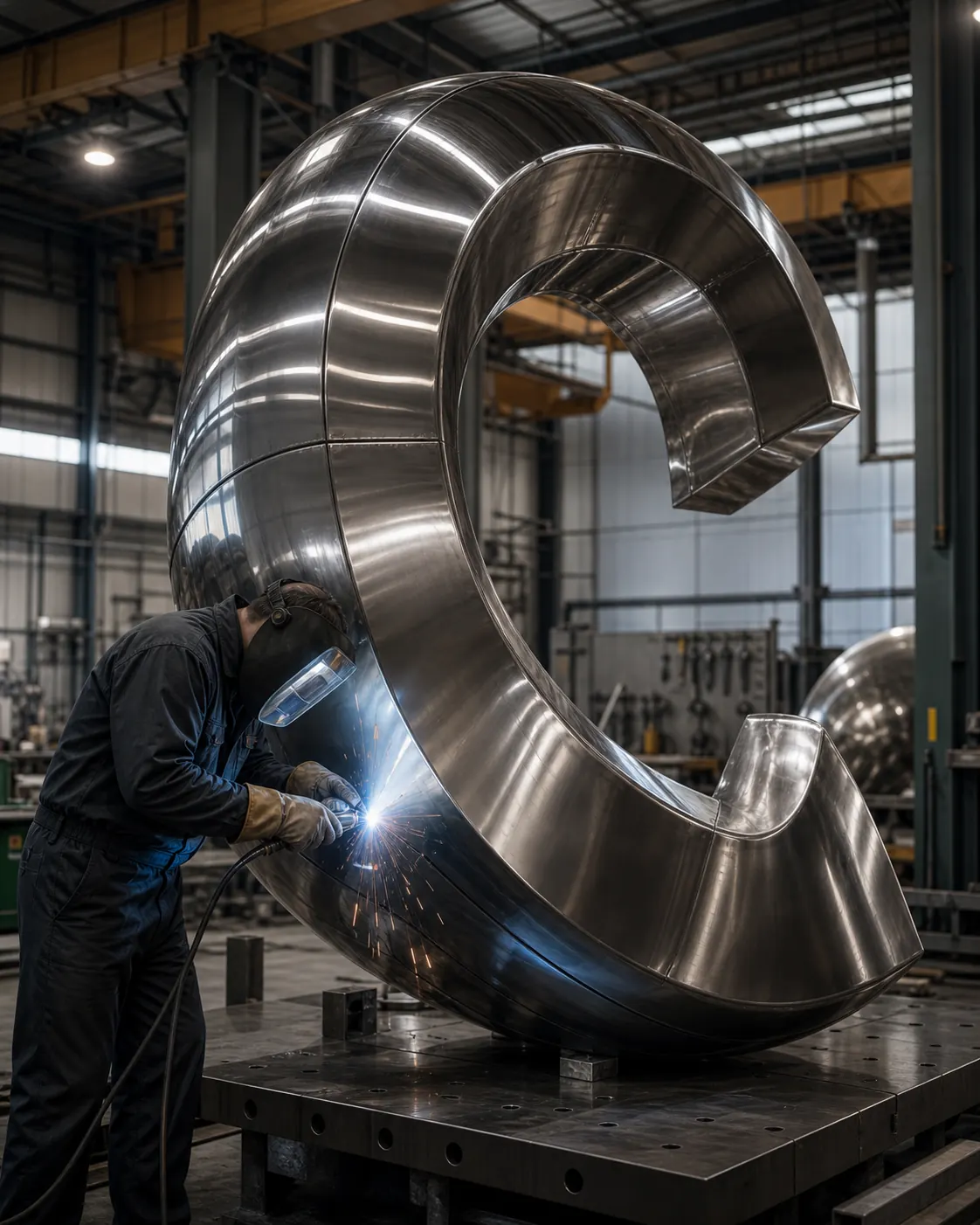
These photographs document construction of one large flying-bird landmark at a Middle East public site. They do not show a completed-project result or disclose a contract price. Review the verified construction record and the Middle East landmark planning guide for the evidence boundary and delivery context.
7. Quality records and approvals need a written scope
A buyer may need design drawings, material certificates, structure photos, sample approvals, trial assembly records, finish inspection images and packing photos. The exact set depends on the project, but it should be named before production. Documentation takes time and should not be assumed to appear automatically.
For high-value work, these checkpoints give the project team a practical way to review progress before the sculpture leaves the workshop. They also reduce disagreement about which finish or assembly condition was approved.
8. Export packing and freight should not be hidden inside one delivery line
Export packing may include custom steel or timber frames, surface protection, moisture control, crate marking, lifting points and container loading plans. Freight can change with crate count, volume, weight, route, insurance and destination handling. A factory price, FOB price and delivered-site price are not interchangeable.
Ask which Incoterm or delivery boundary the quotation uses and who is responsible for customs documents, unloading and temporary storage. The large sculpture export packing checklist provides a separate review path for this stage.
9. Site installation can be a second project if responsibility is unclear
The total project budget may need local foundation work, anchors, road protection, crane and rigging, access equipment, temporary supports, local labor, site safety management, electrical or water coordination, assembly supervision and final surface touch-up. Some of these tasks are usually local; others can be supported by the sculpture team.
A reliable quotation states what installation drawings and guidance are included, what the local contractor must prepare and whether overseas supervision is requested. Use the overseas sculpture installation checklist before the work ships.
Cost-driver table for a buyer's first budget review
| Cost driver | Information needed | Why it changes the quote |
|---|---|---|
| Design status | Reference, sketch, 3D model or approved drawings; included revisions. | Unresolved form increases modelling, review and change risk. |
| Scale and geometry | Height, width, depth, voids, cantilevers and viewing distance. | Geometry controls surface work, frame density, handling and access. |
| Material and finish | Grade, alloy or stone route; finish sample and exposure. | Processing and finish hours can matter as much as raw material. |
| Structure and base | Frame, connection, anchors, engineering boundary and site data. | Loads must pass safely from sculpture into the local foundation. |
| Segmentation | Part split, joints, trial assembly, crate limits and lifting plan. | Segmentation connects workshop method, freight and site assembly. |
| Quality records | Drawings, certificates, samples, progress records and inspections. | Approvals and documentation require planned workshop checkpoints. |
| Packing and freight | Delivery boundary, crate method, route, insurance and destination. | Volume, weight, protection and handling change logistics cost. |
| Installation | Foundation, crane, labor, supervision, assembly and touch-up scope. | Site work can be substantial even when fabrication is complete. |
What to send for a useful first budget
- Site plan, elevation, photographs and the intended sculpture position.
- Approximate height, width, depth and important viewing distances.
- Current design status: reference, sketch, 3D model or approved drawing.
- Preferred material and finish, or permission for the studio to recommend a route.
- Climate facts including coastal salt, pool chemicals, public touch and maintenance access.
- Destination city and country, site access, crane position and storage constraints.
- Target installation date and any hotel opening or public handover deadline.
- Expected scope for foundation information, export packing, freight and installation guidance.
If these facts are not ready, use the hotel arrival sculpture site brief or the landscape sculpture quote brief. When comparing supplier offers, use the outdoor sculpture quotation scope checklist so the included work is visible.
Frequently asked cost questions
How much does a large outdoor sculpture cost?
There is no reliable fixed price without a defined design, dimensions, material, structure, finish, destination and installation scope. A useful budget separates design development, fabrication, engineering, packing, freight and site responsibility.
Can a custom sculpture be priced by height or square meter?
Those measurements can support an early reference, but they are not enough for a contract-ready price. Geometry, structure, finish, segmentation, access, packing and installation can make two sculptures of the same height very different projects.
Which material makes a large outdoor sculpture cheapest?
No material is always cheapest across the complete project. Raw material must be reviewed with forming, welding or casting, finish, structure, maintenance, packing weight, climate and installation access.
What should I send to receive a useful budget?
Send site plans or photos, intended dimensions, viewing distance, design status, material direction, climate, destination country, target installation date and the support expected for foundation, lifting and installation.
Are shipping and installation included in a sculpture price?
Not automatically. The quotation should state whether it includes export packing, freight, insurance, customs documents, unloading, local crane, foundation, anchors, assembly, touch-up and installation guidance.
Are the construction photographs completed-project images?
No. The crane and assembly photographs are verified construction-phase records. They document structure, segmentation and installation work, not a published contract price or completed-project result.
Request a project-specific budget review
Send the site, dimensions, design status, material direction, destination and installation context. WEIERYANG can identify the missing decisions before preparing a project-specific quotation.