How to Plan a Large Stainless Steel Landmark Sculpture for a Middle East Plaza
A plaza landmark succeeds when the visible form, structural system, finish, lifting sequence and site conditions are resolved as one project—not as separate supplier tasks.
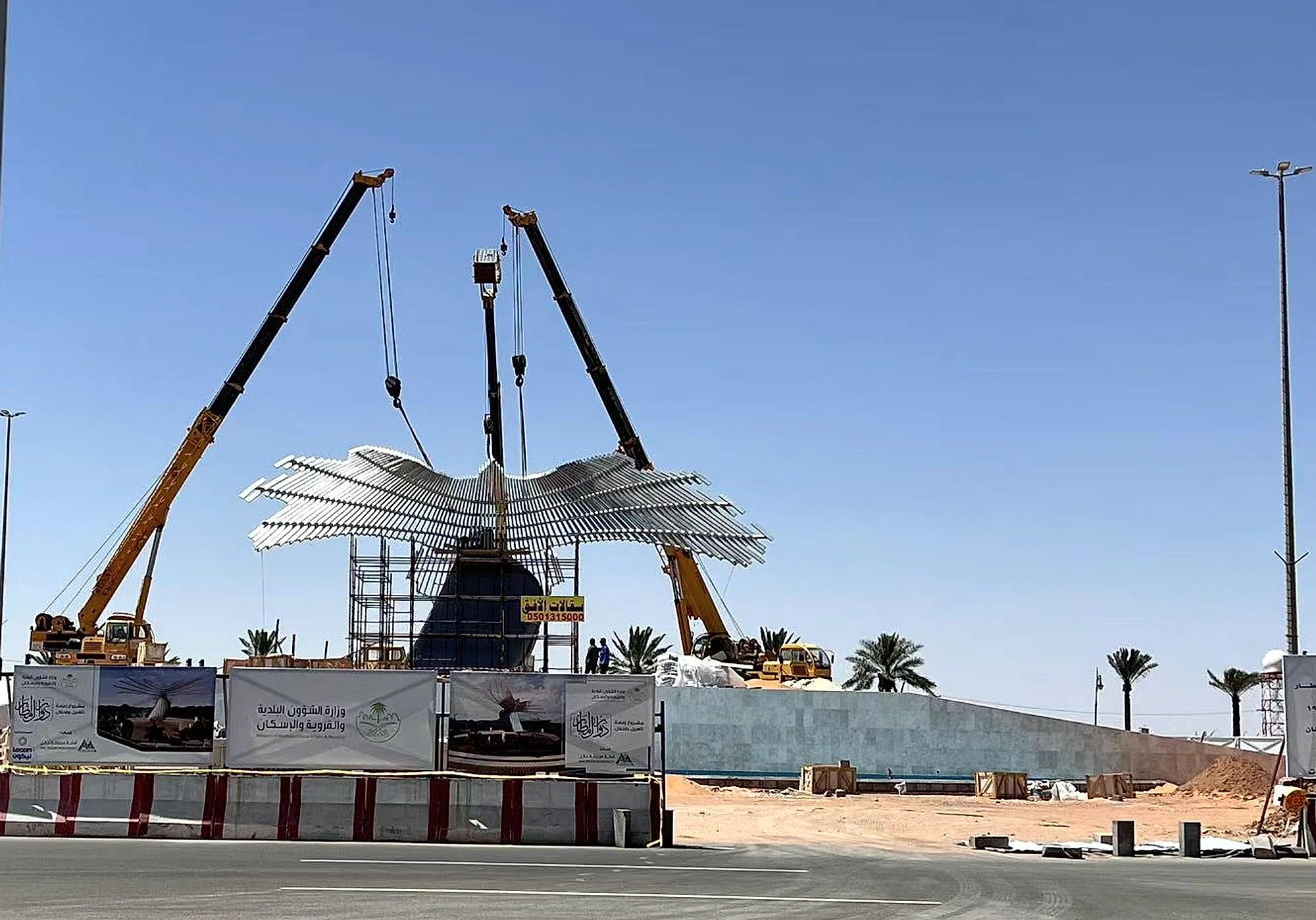
A large stainless steel landmark sculpture for a hotel arrival, mixed-use development or civic plaza cannot be evaluated from appearance alone. The same sweeping wing that creates a memorable silhouette also determines internal structure, segment size, wind response, container planning, lifting points and the amount of alignment work required on site.
This guide explains the project decisions WEIERYANG reviews before a serious quotation. It is written for Middle East developers, landscape architects, public-realm consultants, procurement teams and local contractors who need an art-led form supported by credible fabrication and installation planning.
Site and viewing distance before final scale.
Material and finish before surface approval.
Structure and segmentation before shipping.
Lifting and local scope before installation.
1. Start with the plaza, not the sculpture reference
A reference image can establish mood, but it cannot define the correct monument. The first review should locate the sculpture within the actual arrival sequence: the principal vehicle approach, pedestrian views, façade lines, landscape planting, water edge, night lighting and any security or maintenance zones. A form that reads well at fifteen metres may disappear from a highway approach; a base that looks elegant in a rendering may conflict with drainage, waterproofing or service access.
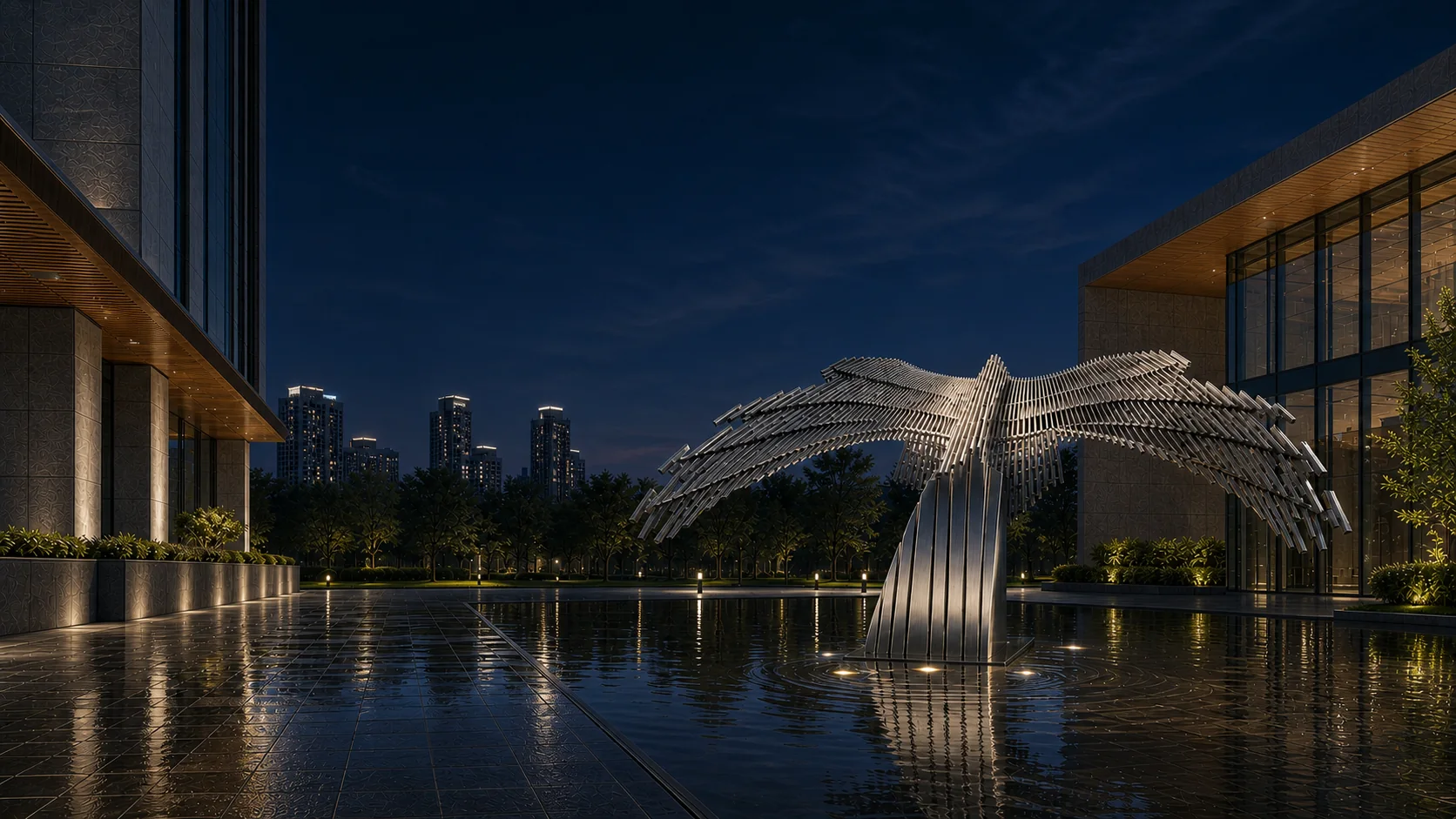
For a shallow reflecting pool, the sculpture base should be coordinated with water depth, recessed lighting, waterproofing layers, drain positions and access for inspection. For a dry plaza, the foundation interface must work with paving build-up and movement joints. For a hotel arrival, sightlines from vehicles, lobby glazing and drop-off canopy can be more important than the frontal render.
The useful starting package is simple: current site photographs, a dimensioned plan, one or two elevations, the intended sculpture zone and the dominant viewpoints. Our public art planning route explains how site evidence becomes part of the visual decision.
2. Review sun, dust, water and night lighting together
Middle East sites vary widely. An inland plaza with heat and windblown dust is not the same exposure as a coastal promenade, a chlorinated hotel water feature or a shaded resort courtyard. Material grade, surface texture and maintenance access should therefore be specified for the real site rather than copied from another project.
Brushed stainless steel can produce controlled highlights and reduce the mirror-like distortion associated with highly polished surfaces, but the brushing direction, weld finishing and panel sequence need consistency across a large form. Where salt, pool chemicals or more demanding corrosion exposure are present, 316L stainless steel is frequently considered. It is not a universal answer: the final route should be checked against structural requirements, cleaning practice, local environment and the finish sample approved by the client.
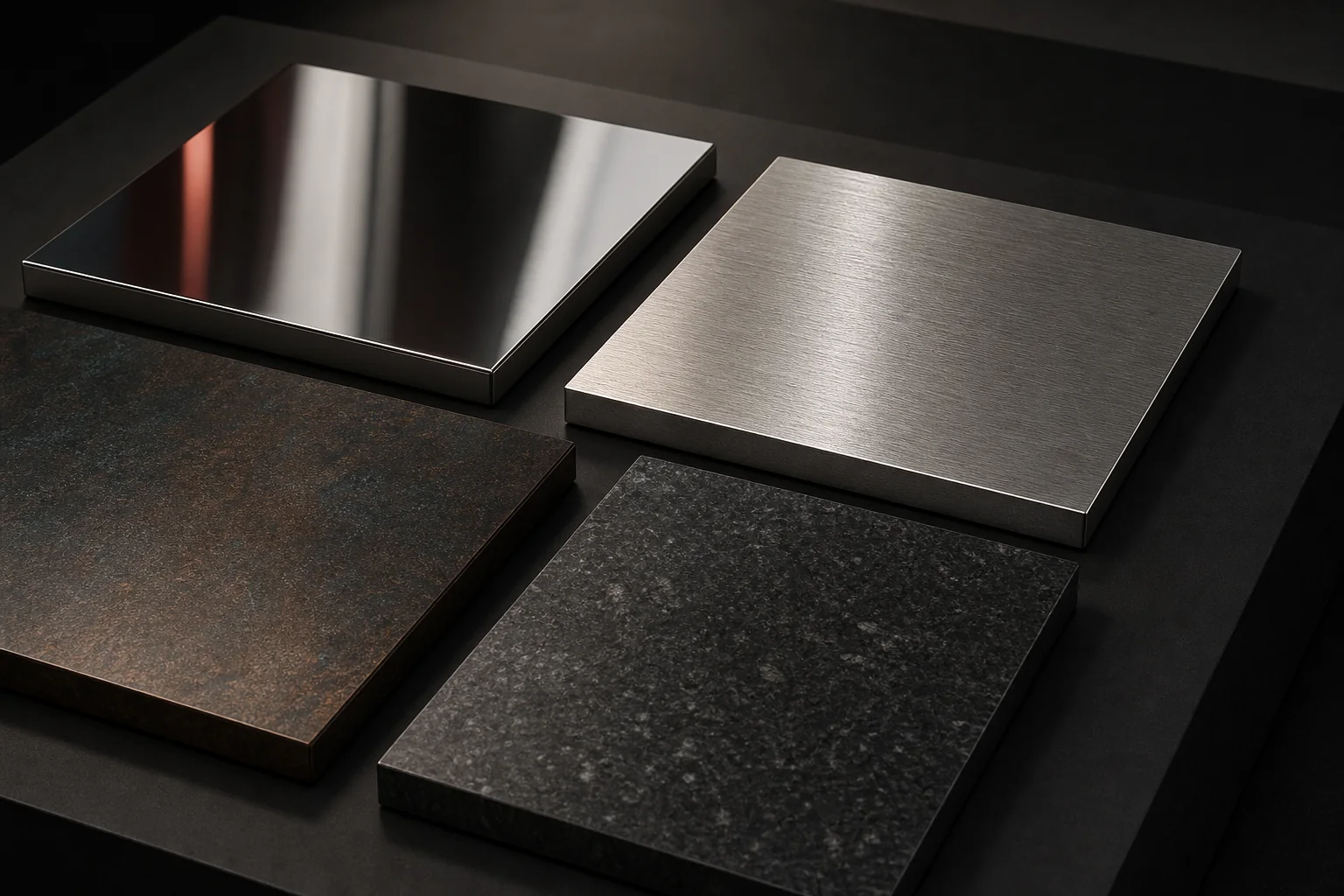
Night lighting is equally structural to the experience. Grazing light can reveal the depth of repeated slats, while an uncontrolled point source can create distracting hot spots. Pool lighting changes the underside and reflected silhouette. Early coordination between sculpture, landscape and lighting teams reduces the need to hide cables, revise recesses or move fixtures after the monument is installed. See the outdoor sculpture material routes for a wider comparison of stainless steel, bronze, stone and hybrid options.
3. Turn the artistic form into buildable segments
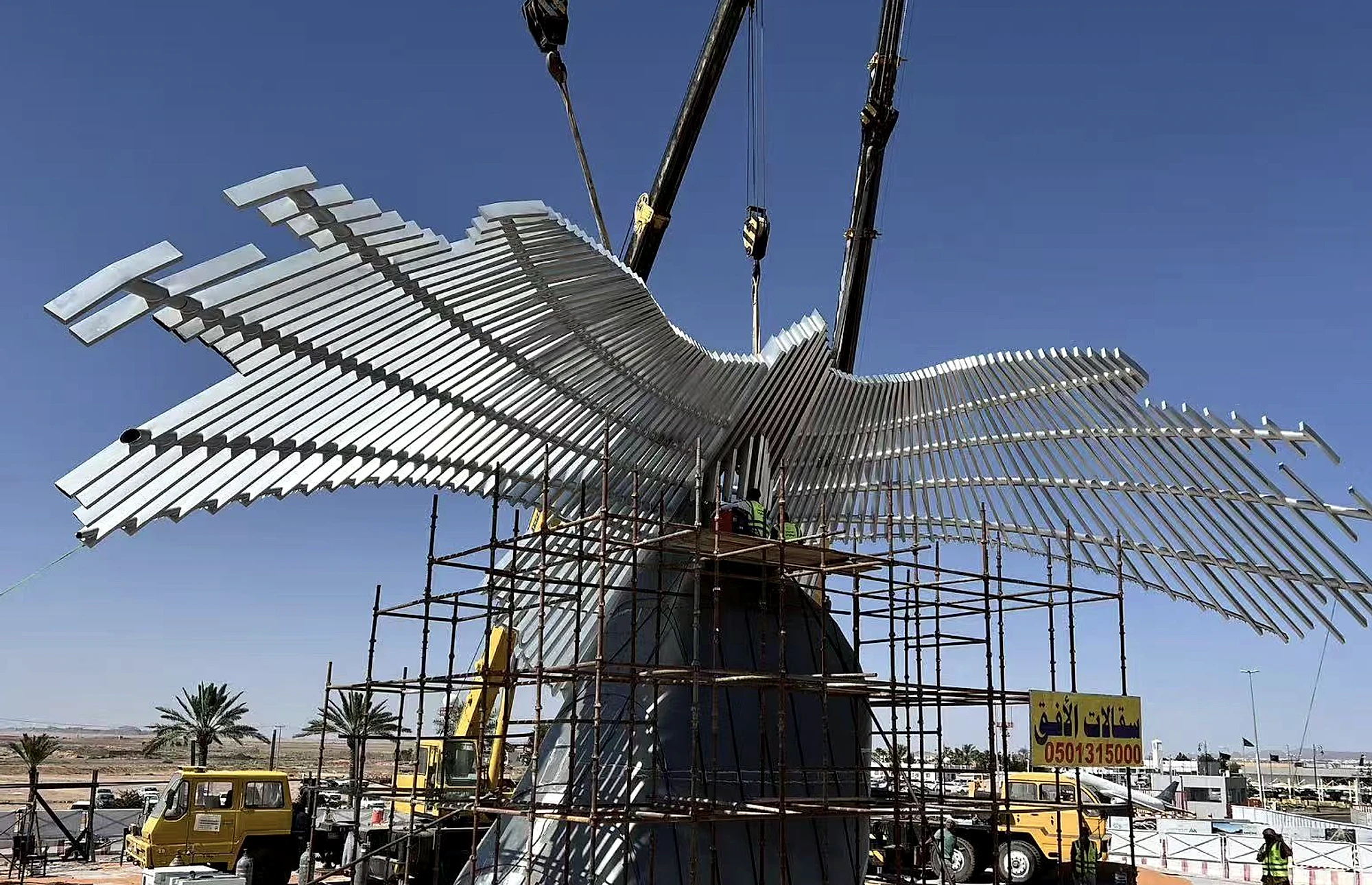
The flying-bird sculpture shown here depends on many parallel metal members forming a continuous wing. The visual rhythm is delicate, but the production logic is not. Each repeated slat has a position, angle, connection and finishing sequence. The central body must carry the loads while keeping the wing profile visually light. Segment boundaries must be placed where they can be connected, inspected and refinished without breaking the intended flow.
Segmentation should be decided while the form is being engineered. Container size, route restrictions, available cranes, local working area and the sequence of final alignment all influence where the sculpture divides. If segmentation is postponed until after the form is frozen, the result may be excessive site welding, difficult access or visible joints in important viewing zones.
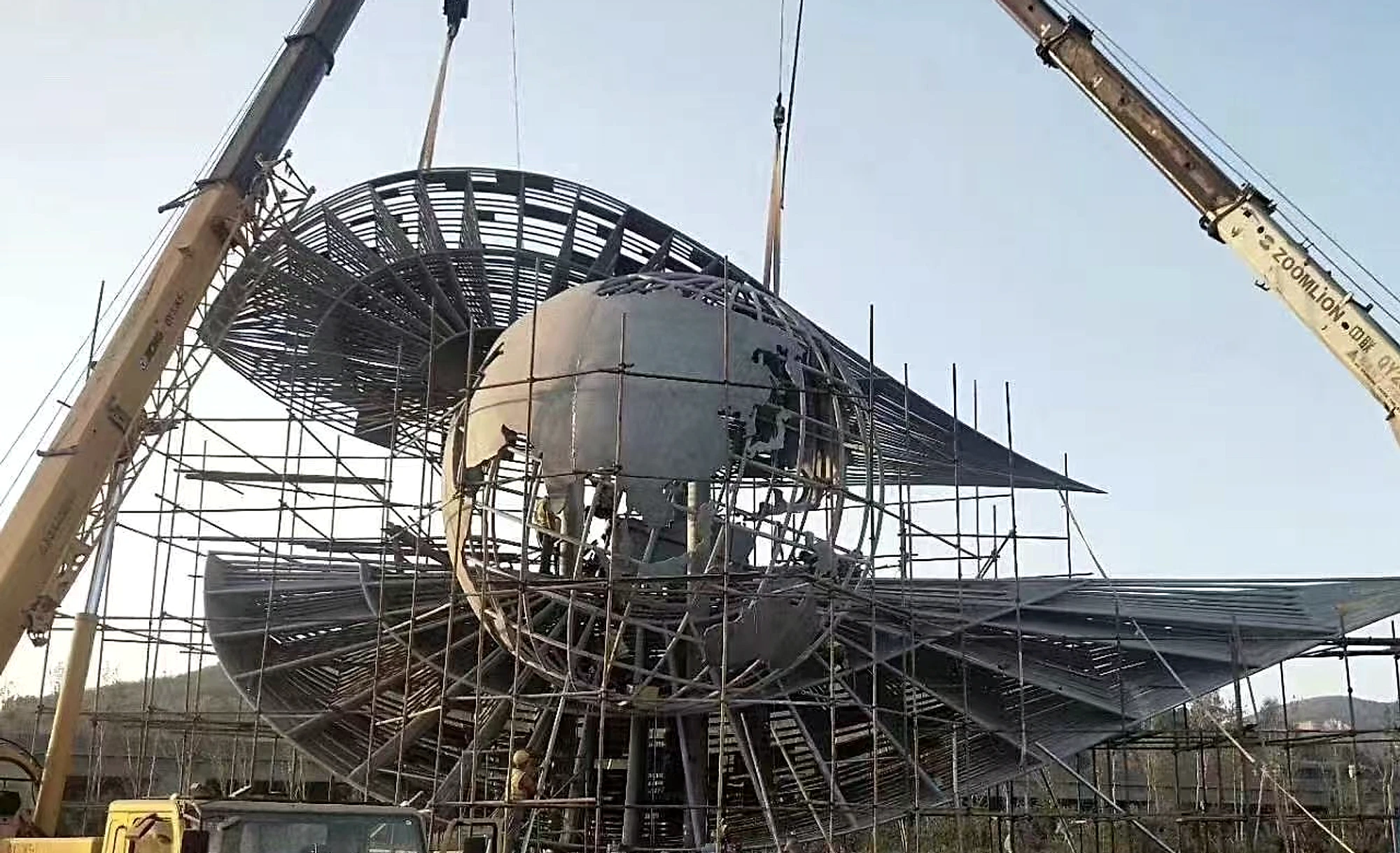
A responsible technical package may include overall geometry, structural framing, segment joints, base interface, lifting points and a trial-assembly plan. The level of engineering depends on project scope and local approval requirements. WEIERYANG coordinates sculpture fabrication information; the project team should also confirm local codes, foundations and statutory review with the appointed consultants. Our sculpture design and fabrication process shows where these decisions enter the workflow.
4. Plan lifting before the truck reaches site
Large public sculpture installation is a sequence, not a single crane lift. The team needs to know where vehicles can stand, which components arrive first, where temporary supports sit, how the main core is surveyed, when wing segments are connected and which surfaces must be protected during lifting. Rigging points should be engineered so that a segment remains stable without marking a finished visible surface.
The division of responsibility must be written clearly. Typical questions include: Who provides the crane and certified rigging crew? Who surveys anchors and levels the base? Who supplies temporary power and access equipment? Who performs final stainless-steel finishing after connections? Who seals the base, restores waterproofing and tests lighting? A useful installation method statement answers these questions before mobilization.
Construction records matter because they show more than a finished photograph. They reveal whether a supplier has considered access, temporary works, segment scale, lifting and site coordination. They also help buyers ask specific questions. The images in this article are labelled as verified construction-phase evidence; concept imagery elsewhere on the site is labelled separately.
5. What to include in a reliable RFQ
A useful request for quotation gives the sculpture team enough information to identify the production route and the unanswered risks. A single inspiration image and target price usually produce only a broad estimate. The following package creates a better first review:
- Site plan, elevations and current photographs.
- Target height, width and dominant viewing distance.
- Landscape, water, façade and lighting context.
- Coastal, pool, heat, dust and public-touch exposure.
- Preferred material, finish and reflectivity direction.
- Access limits, crane position and local contractor scope.
- Destination, target installation date and approval stages.
- Available concept files, BIM/CAD information or design intent.
If exact information is not available, send what is known and identify what is still being developed. The studio can then separate confirmed assumptions from provisional ones. For a more detailed checklist, read what buyers should prepare before requesting a landscape sculpture quote.
6. Use evidence to qualify the delivery partner
For hotel and real-estate projects, a sculpture partner should be able to discuss both art and delivery. Ask how the team turns drawings into full-scale geometry, reviews material samples, controls repeated parts, tests assembly, protects finished surfaces, packs for export and supports the local installation team. The strongest answer is not a sales claim; it is a sequence of relevant drawings, samples and construction records.
WEIERYANG positions itself as an art-led international sculpture studio with controlled production capability. Project scope can include structural design coordination, fabrication, finish review, trial assembly, export packing and overseas installation guidance. Final responsibilities are agreed around the site, destination and local consultant structure. Review selected project and construction evidence or explore the custom stainless steel sculpture capability.
Frequently asked project questions
What information is needed to quote a large plaza sculpture?
Send a site plan, current site photographs, intended sculpture zone, target scale, material and finish direction, environmental exposure, destination, access restrictions, local contractor information and required installation date.
Is 316L stainless steel always required for a Middle East outdoor sculpture?
No single grade fits every site. The material route should be reviewed against coastal salt, pool chemicals, dust, heat, maintenance access, finish expectation and structural requirements. 316L is frequently considered where corrosion exposure is more demanding, but the project specification must be confirmed for the actual site.
Can a large sculpture be divided for export and site assembly?
Yes. Segmentation can be designed around structural continuity, finish control, container limits, lifting capacity, transport access and the sequence of site assembly. The segment strategy should be decided while the sculpture form is still being engineered.
How can a buyer verify fabrication and installation capability?
Ask for relevant construction-phase records, structural and segment drawings, trial-assembly evidence, finish samples, packing logic, lifting plans and a clear division of responsibilities between the sculpture producer and local installation team.
Start a private project review
Send your site plan, photographs, intended scale, material direction, destination and installation context. WEIERYANG will review the information and identify the decisions needed before a responsible quotation.