Overseas Sculpture Installation Checklist for Hotels and Public Plazas
Large sculpture delivery is not finished when fabrication is finished. Segmentation, packing, access, lifting, anchors and site coordination decide whether the installation is calm or improvised.
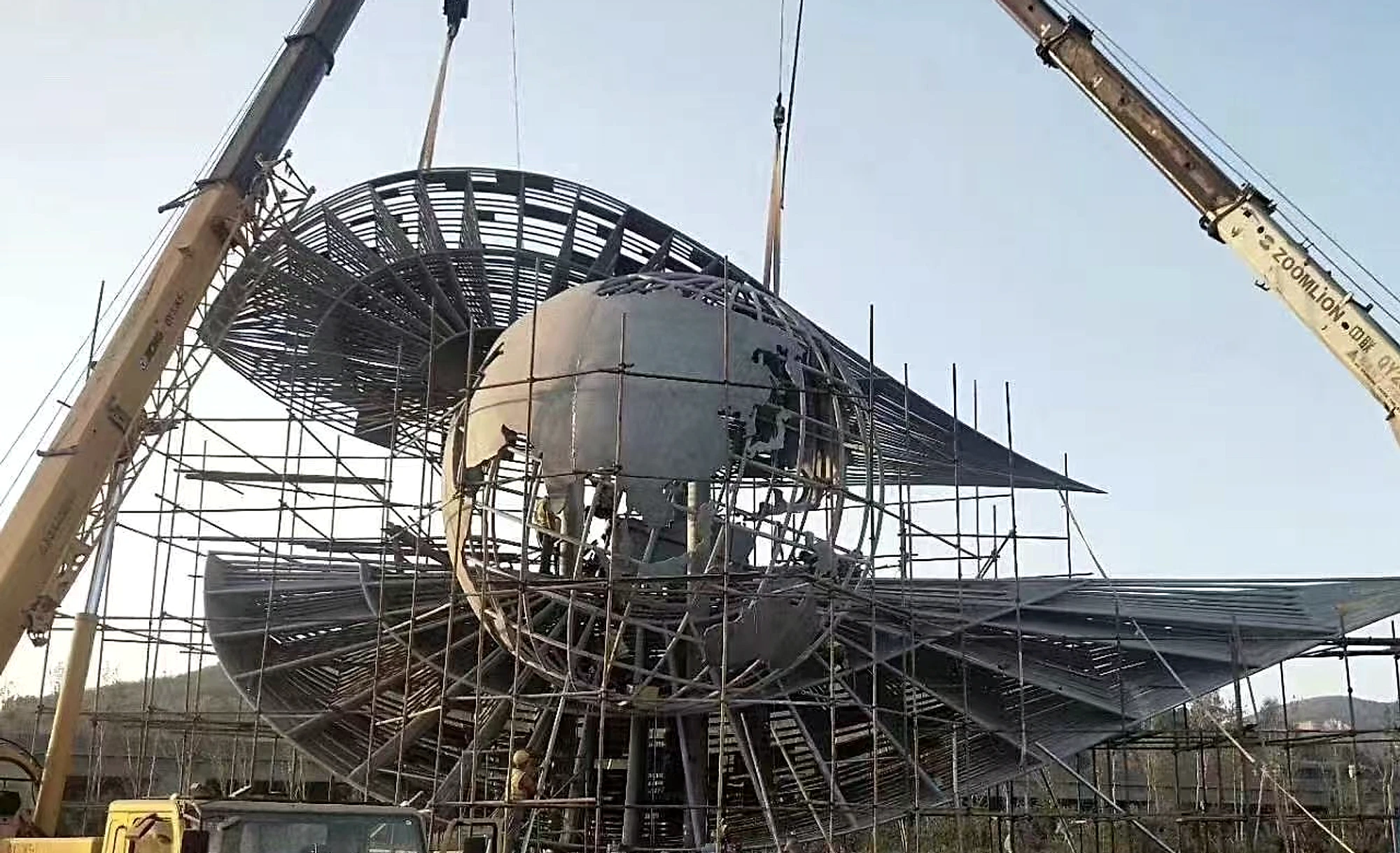
For overseas hotel, resort and public-plaza sculpture projects, installation planning should begin before the quotation is final. The object must be made, protected, shipped, unloaded, lifted, aligned and finished on a real site with local constraints.
This checklist explains what project buyers, architects and construction teams should prepare before a large custom sculpture ships overseas. It is written for serious projects where the artwork is part of an arrival court, public realm, landscape axis, water feature or development landmark.
Workshop readiness
Final dimensions, segment logic, surface finish, trial assembly and crate plan.
Site readiness
Access, foundation, anchor interface, crane position, storage and weather window.
Team readiness
Local contractor role, lifting crew, communication route and final touch-up plan.
1. Confirm what must happen before the sculpture leaves the workshop
The strongest installation plan starts inside the workshop. Before packing, the project team should confirm the final dimensions, material grade, surface direction, segment list, connection logic, anchor assumptions and finish protection. For large stainless steel sculpture, the team should also review whether repeated members, wing slats, curved skins or long arcs need temporary support during transport and site handling.
Trial assembly, photo records and marking systems reduce uncertainty. If pieces are packed without clear position labels, lifting points or connection notes, the site team may lose time identifying parts and protecting finished surfaces. A serious brief should ask how the object is broken down, not only how it looks when complete.
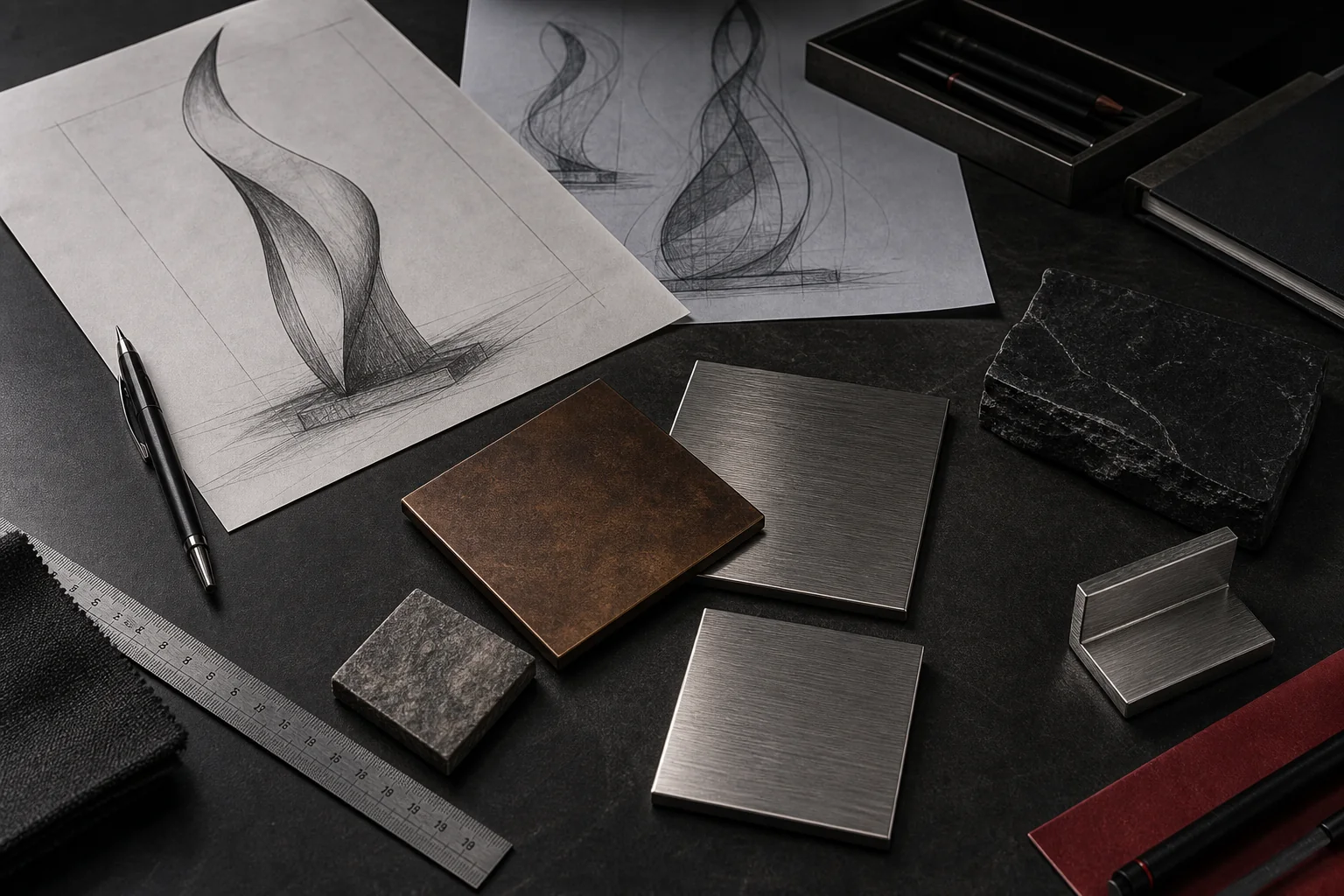
2. Decide segmentation with shipping and lifting in mind
Segmentation is a design, engineering and logistics decision at the same time. A segment split can affect internal structure, weld positions, surface finishing, crate size, container choice, local lifting method and the amount of visible work needed after installation. It should therefore be discussed before a final price is treated as fixed.
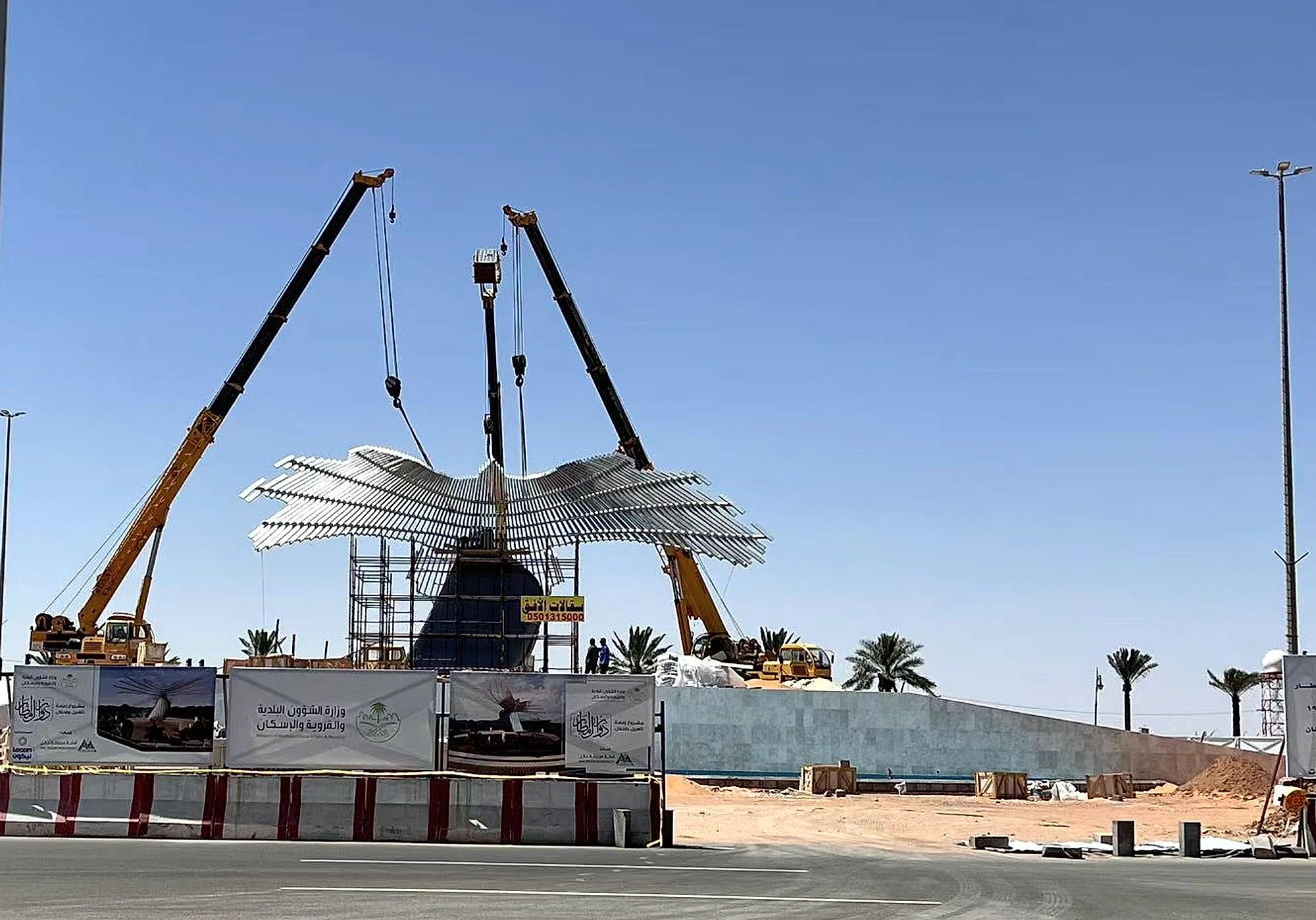
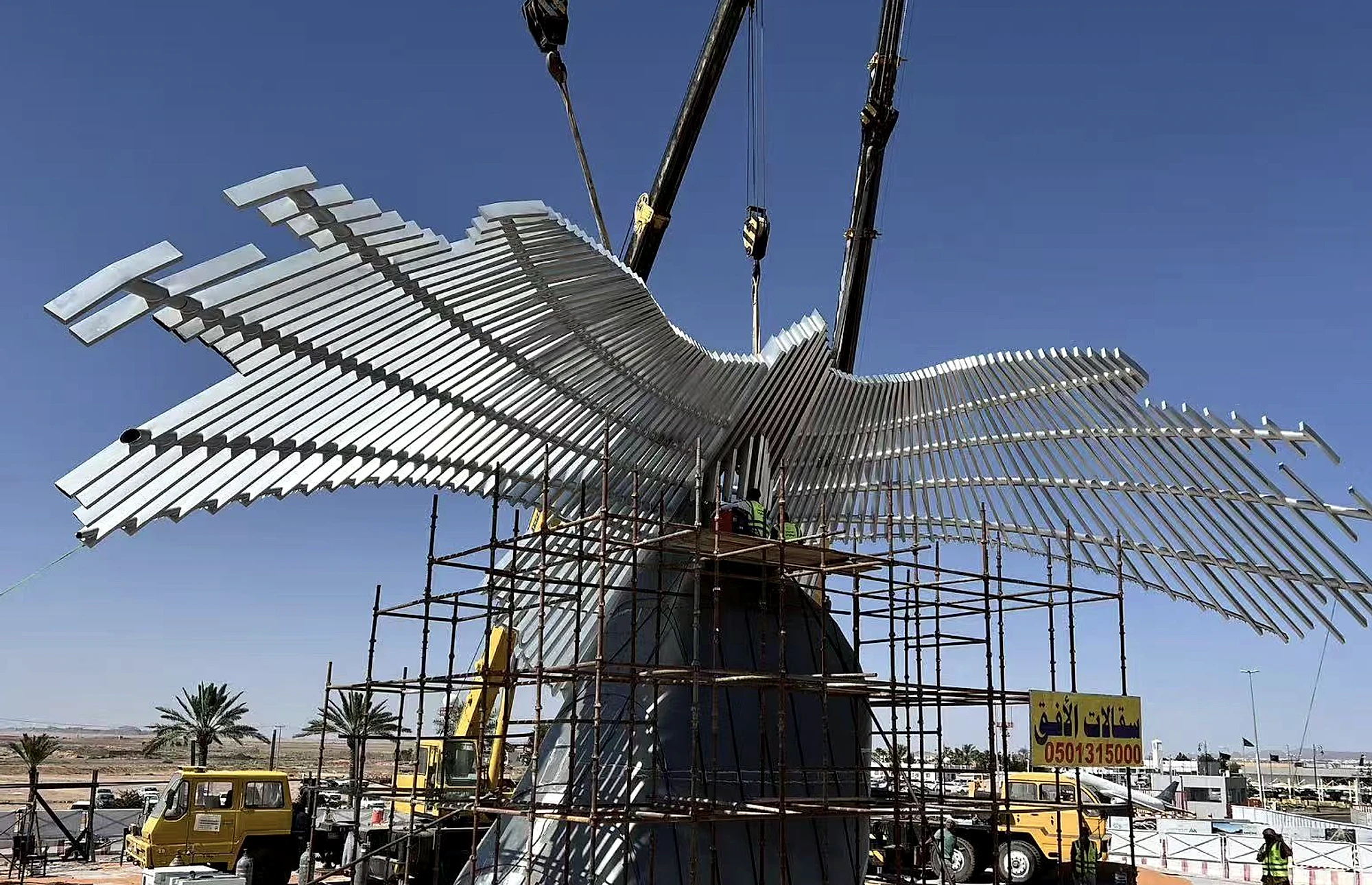
For a hotel arrival sculpture or public plaza landmark, the best segmentation usually balances three needs: the form should stay visually clean, the parts should travel safely, and the local team should be able to align and secure them without guessing. Oversized forms may require crane-assisted lifting, temporary supports and more controlled site access than a small garden sculpture.
3. Protect the finish before it becomes a public object
Many outdoor sculptures fail visually because the finish is damaged before opening day. Brushed stainless steel, mirror stainless, bronze patina and stone edges all need protection during packing, unloading and alignment. The installation plan should specify where surfaces are safe to touch, where straps can be used, what parts need padding and how final cleaning or touch-up will be handled.
Material choice also affects maintenance after installation. Coastal air, pool water, irrigation, guest touch, dust and cleaning chemicals all change the risk profile. Buyers reviewing outdoor sculpture should connect material decisions with installation and maintenance, not treat them as separate conversations.

4. Prepare the site for unloading, lifting and alignment
The local team should provide site photos before shipment: access roads, unloading area, crane location, laydown zone, foundation or plinth, water edge, paving levels, overhead limits and the route from the truck to the final position. These photos often reveal practical issues that drawings do not show.
For public realm and hospitality projects, installation may need to work around other trades, landscape planting, facade completion, lighting, water systems and opening deadlines. Confirming the sequence prevents the sculpture from arriving before the site can receive it or after access has been blocked by finished paving, glass, planting or temporary barriers.
5. Confirm anchors, water, lighting and final responsibilities
The sculpture team and local construction team should agree who owns the foundation, anchor bolts, waterproofing interface, lighting coordination, water-system protection, final surface cleaning and local safety requirements. These responsibilities can differ by country, project type and contract structure.
If a sculpture sits in a reflecting pool, fountain basin or wet landscape zone, installation planning must include water depth, drainage, service access and protection from standing water or splash. If lighting is important, review fixture positions before the sculpture blocks access or creates glare that changes the intended finish.
6. The overseas installation checklist
Before shipment, overseas project teams should check the following items. Not every project needs the same level of detail, but missing information here usually becomes a cost, delay or finish risk on site.
- Final approved sculpture dimensions, material route and finish direction.
- Segment list, connection method, part marking and assembly sequence.
- Export crate plan, container assumptions and protection method for finished surfaces.
- Foundation, plinth, anchor or embedded-part interface agreed with the local team.
- Unloading area, crane position, laydown zone and access route photographed.
- Local lifting crew, contractor responsibility and safety requirements confirmed.
- Water, lighting, paving, planting and other site trades coordinated around installation.
- Final cleaning, touch-up, inspection photos and handover record planned in advance.
For early project facts, read the hotel arrival sculpture site brief guide. For verified stainless-steel landmark evidence, see the Middle East stainless steel landmark sculpture guide.
Frequently asked installation questions
What should be ready before a large sculpture ships overseas?
The project team should confirm final dimensions, segment list, finish protection, crate plan, destination country, site access, lifting route, foundation or anchor interface, installation date and local contractor responsibility.
Why is sculpture segmentation decided before quotation?
Segmentation changes structure, weld locations, surface finishing, crate size, container use, lifting points, site assembly time and final touch-up scope. It is part of the real cost, not only a production detail.
Does WEIERYANG support overseas installation?
Project scope can include export packing, installation drawings, remote coordination and overseas installation guidance. The exact support model should be agreed around destination, site access, schedule and the local construction team.
What site photos help during installation planning?
Useful photos include access roads, unloading area, crane position, foundation or plinth, nearby water or paving, overhead restrictions, storage area, power and lighting interfaces, and the main viewing directions.
Plan an overseas sculpture installation
Send site photos, dimensions, material direction, destination country, installation date and local contractor scope. WEIERYANG will review the sculpture route before production and shipment planning.