Large Outdoor Sculpture Foundation and Anchor Checklist for Hotels and Public Plazas
A sculpture base is not just a plinth detail. Foundation, anchor, lifting, water, lighting and local responsibility should be reviewed before fabrication is locked.
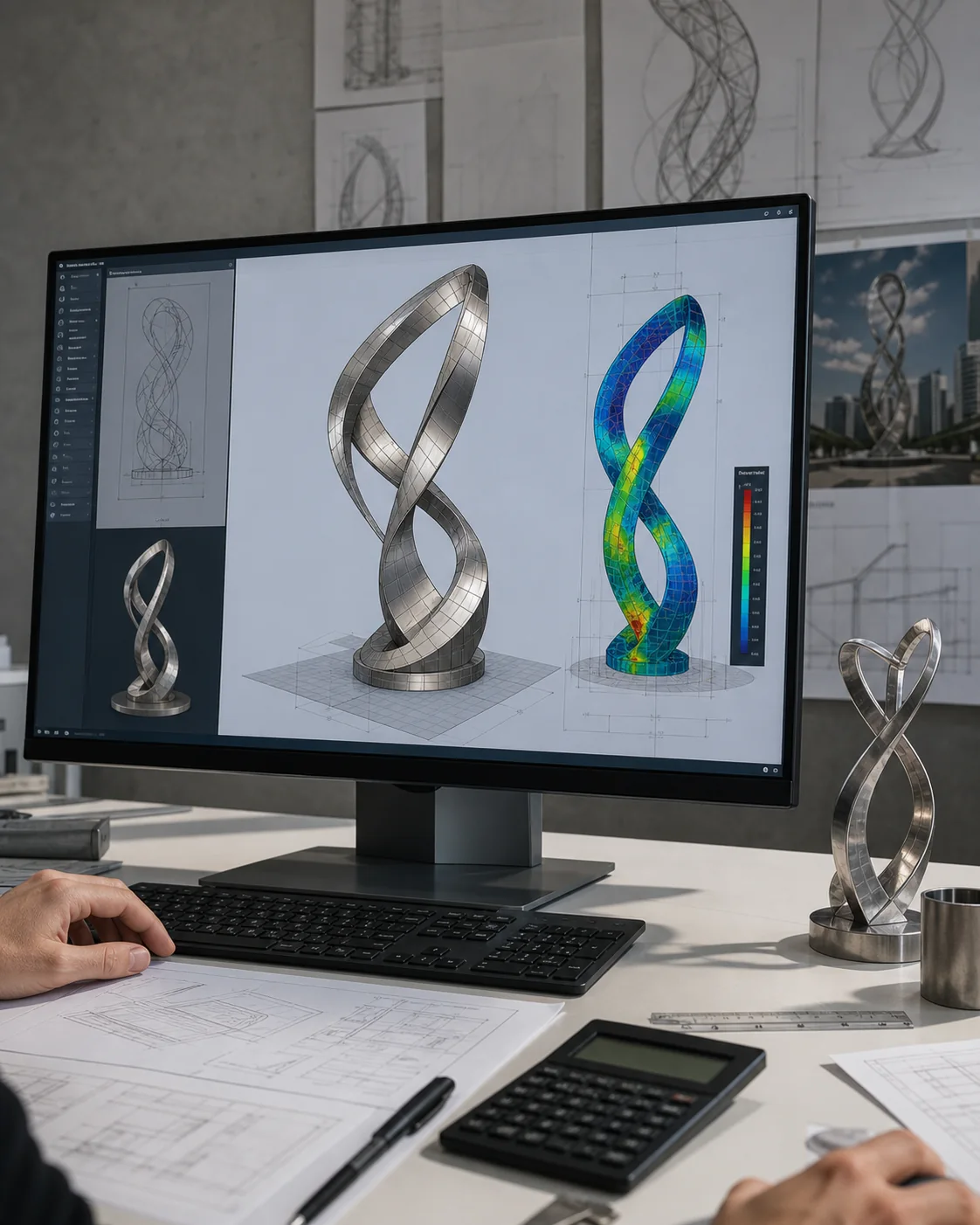
Large outdoor sculpture often becomes difficult at the base. The form may be beautiful, the material may be approved, and the quote may look complete, but the project can still stall if foundation, anchor and local site responsibility are not clear.
This buyer guide helps hotel, resort, real-estate, landscape and public-space teams ask better questions before fabrication. It is not a structural design manual. Final foundation and anchor design must be confirmed by the project's local licensed structural engineer or responsible construction team. The goal here is to make the coordination scope visible early, so the sculpture studio and site team do not solve the base too late.
Confirm the interface
Define whether the sculpture meets concrete, stone plinth, paving, water basin, soil, roof deck or a recessed base.
Share real constraints
Send wind exposure, public touch, water, drainage, crane access, slab limits and local contractor scope.
Lock responsibility
Separate sculpture base plates, anchor information, foundation construction, local lifting and final touch-up.
1. Start with the ground condition, not the sculpture object alone
A large outdoor sculpture can sit on many different conditions: concrete pad, stone-clad plinth, reflecting pool, water feature basin, paved plaza, landscape soil, roof terrace or podium deck. Each condition changes the base detail. A recessed base that looks clean in a rendering may need drainage, access panels, waterproofing and anchor inspection space. A visible plinth may be easier to inspect, but it changes the artwork's proportion and visitor experience.
Before requesting a final quotation, the buyer should mark the exact sculpture position on the site plan and confirm the intended ground build-up. Existing slab thickness, waterproofing layers, pool equipment, underground utilities, planter build-up and finished paving levels can all affect whether the sculpture can be installed as drawn.

2. Ask what loads and assumptions the sculpture team can provide
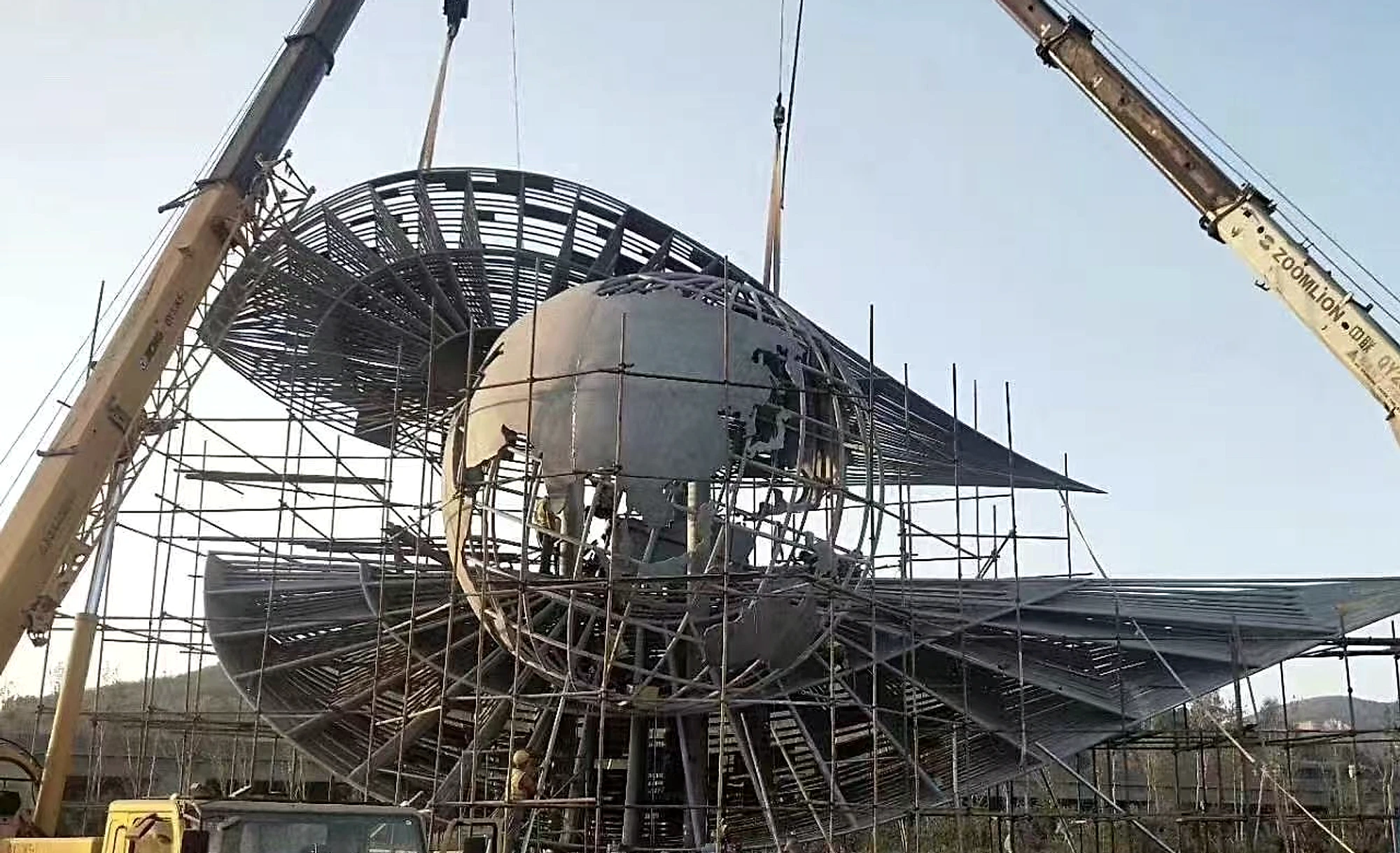
The sculpture studio should be able to provide useful coordination information: approximate weight, overall dimensions, center of gravity assumptions if relevant, base plate or connection concept, lifting points, segment weights, and the intended installation sequence. These inputs help the local engineer review foundation capacity and anchor strategy.
The buyer should not expect a sculpture supplier to replace the local engineer. Site wind requirements, seismic rules, soil conditions, slab capacity, waterproofing responsibility and local code compliance sit with the project team. But if the sculpture quotation does not explain what information will be provided for foundation coordination, the project may face late changes in base shape, anchor positions or installation method.
3. Base plates, anchors and access panels must be planned before finishing
Anchor decisions affect the artwork. A hidden base may need access panels or removable elements. A heavy cantilevered form may need larger internal structure and a more visible connection zone. A sculpture in a public plaza may need tamper-resistant details and maintenance access. If these questions are solved after the surface finish is complete, the site team may be forced into visible compromises.
For stainless steel sculpture, anchor and base decisions can also affect brushing direction, weld access, final polishing and site touch-up. For bronze or stone-metal hybrid work, base contact can affect staining, corrosion risk and long-term maintenance around paving or water.
4. Water, lighting and paving can change the anchor detail
Many hotel and resort sculptures sit near reflecting pools, fountains, wet stone, irrigation or night lighting. Water changes corrosion risk, drainage, waterproofing, access and maintenance. Lighting changes cable routes, fixture access and glare. Finished paving changes tolerances and whether anchor inspection remains possible after installation.
If the sculpture is installed into a water feature, ask who is responsible for waterproofing around the base, where drainage sits, how standing water is avoided, how cleaning access works and whether metal parts are isolated from incompatible materials. If the sculpture is lit from the base, confirm fixture positions before the anchor layout blocks service access.

5. Installation access should be checked before the foundation is poured
The foundation may be ready on paper but still impossible to install efficiently if the site cannot receive the sculpture. Before foundation work is finalized, review unloading area, crane reach, truck access, temporary storage, pedestrian closure, finished paving protection, overhead restrictions and the installation sequence.
A sculpture installed before landscape completion has different risks from one installed after the hotel or plaza is nearly finished. Early installation gives better access but may expose the work to other trades. Late installation protects the finish but may make lifting, turning and alignment more difficult. The best route depends on site sequence, sculpture size and the local contractor's control of the area.
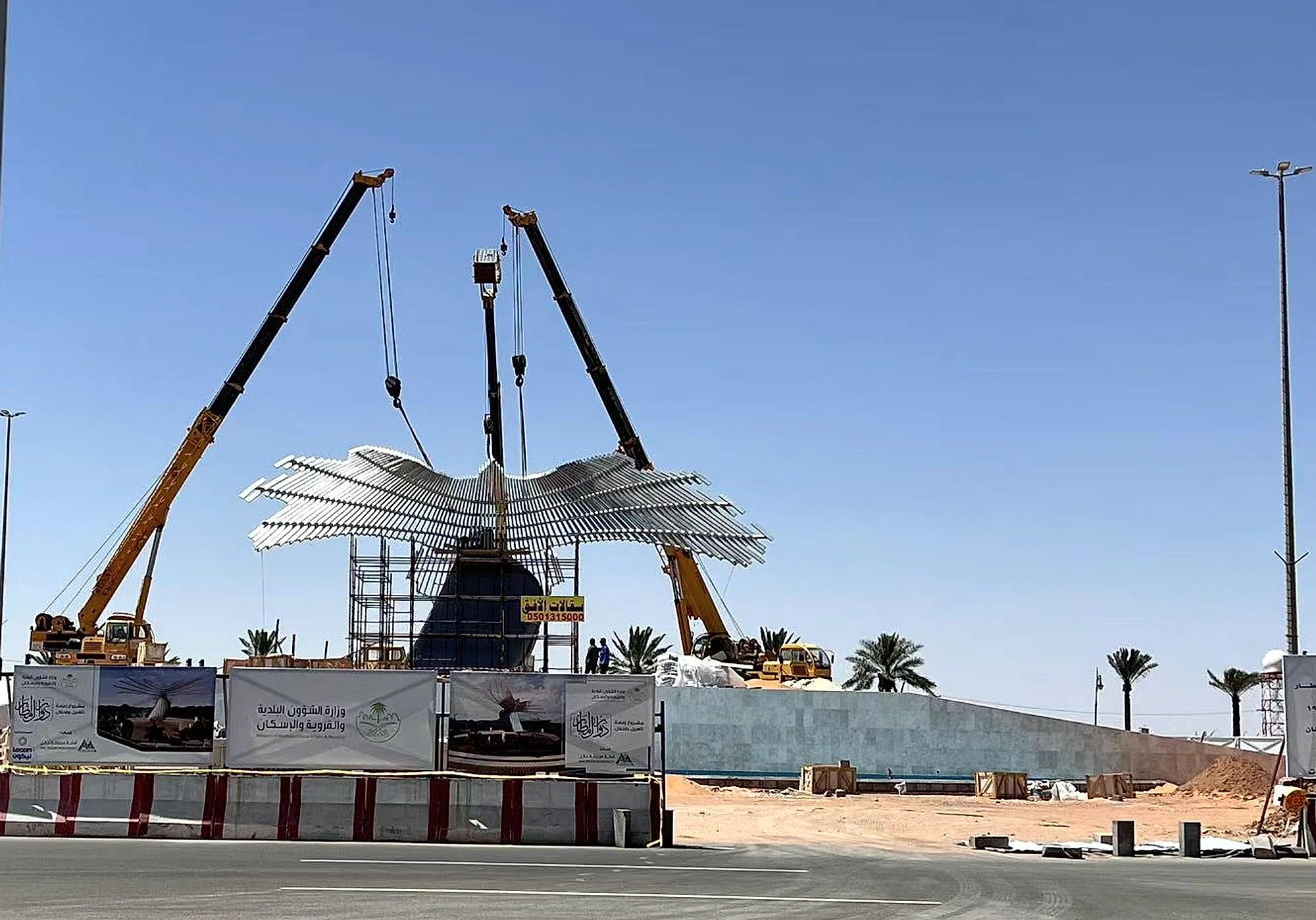
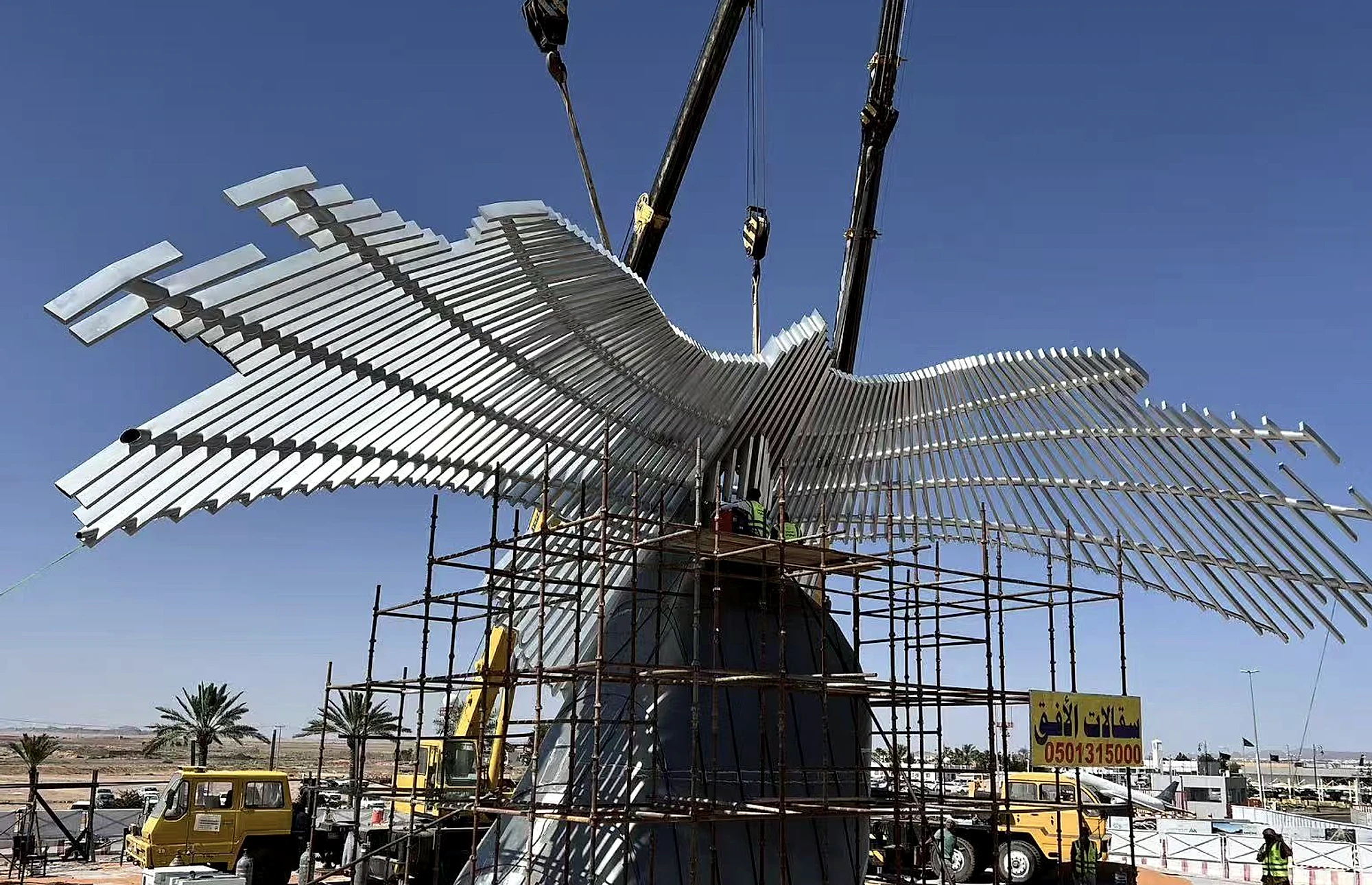
These images come from the verified flying-bird construction record. They show lifting access and member alignment during site work; they do not establish a final foundation design or depict a completed project. The Middle East landmark planning guide explains the wider installation sequence.
6. Use this coordination table before contract
When comparing suppliers, ask each team to state the same foundation and anchor boundaries. This makes the price more honest and helps the local construction team understand what they must confirm.
| Coordination point | What to confirm | Why it matters |
|---|---|---|
| Site condition | Concrete, plinth, paving, pool, soil, roof deck, podium or existing slab condition. | The same sculpture may need a different base detail for each ground condition. |
| Foundation owner | Who designs, builds, checks and approves the foundation or plinth locally. | Responsibility gaps cause late delays and unclear liability. |
| Anchor interface | Base plate concept, anchor assumptions, access needs and whether anchors are visible or hidden. | Anchor choices affect frame, finish, inspection and installation sequence. |
| Water and drainage | Pool depth, splash, waterproofing, drainage, cleaning access and metal isolation where needed. | Water exposure can damage finish and make maintenance difficult. |
| Lifting route | Crane position, truck access, laydown area, segment weights and temporary supports. | The site may not be able to install the sculpture even if the foundation exists. |
| Handover records | Installation photos, anchor notes, final cleaning, inspection and maintenance guidance. | Records help the owner manage the sculpture after opening. |
7. The checklist buyers should send for review
A useful foundation and anchor review brief is practical. It does not need to be perfect, but it should expose the site facts that change the base and installation plan.
- Marked site plan showing exact sculpture position, viewing direction and nearby edges.
- Ground condition: slab, plinth, paving, pool, soil, roof deck, podium or water feature basin.
- Approximate sculpture height, width, material direction and whether the form has cantilevered parts.
- Photos of access roads, unloading area, crane position, foundation zone and overhead restrictions.
- Local engineer or contractor responsible for foundation, anchors, waterproofing and final site approval.
- Water, drainage, lighting, power, planting and paving interfaces near the base.
- Target installation date, opening date and whether other trades will still be active.
- Any maintenance access, public-touch, wind exposure, coastal air or cleaning limits.
For the first project package, read the hotel arrival sculpture site brief. For quote comparison, use the outdoor sculpture quotation scope checklist. For site execution, review the overseas sculpture installation checklist.
Frequently asked foundation questions
Who should confirm the final foundation for a large outdoor sculpture?
The final foundation and anchor design should be confirmed by the project's local licensed structural engineer or responsible construction team. A sculpture studio can provide sculpture load, base, anchor and segmentation information for coordination.
What information should buyers send before foundation planning starts?
Useful inputs include site drawings, intended sculpture position, approximate size and weight, material direction, paving or pool details, local wind or public-touch conditions, crane access and the party responsible for foundation construction.
Why should anchor assumptions be reviewed before fabrication?
Anchor assumptions affect base plates, access panels, internal frame, split lines, packing, lifting sequence and site installation. Late anchor changes can force visible base changes or extra site work.
Are the images in this guide completed project photography?
No. The images are labelled as engineering, material, workshop or verified construction-phase evidence. They are used to explain planning decisions, not to claim every image is a completed client project.
Review a sculpture base before fabrication
Send the site plan, foundation condition, intended scale, material direction, destination country, installation access and local contractor scope. WEIERYANG can review the sculpture-side base, anchor and installation assumptions before production.