Metal Flower Sculpture: An OEM Design & Fabrication Brief
This guide is for designers and procurement teams preparing a new flower-shaped commission. OEM here means fabrication to approved drawings and an agreed scope. A flower reference suggests a visual direction; it does not determine the material, support arrangement or suitability for a particular site.
Define the bloom before choosing a fabrication route
Start with the intended character: a recognisable botanical form, a simplified silhouette or an abstract group of petals. Identify which features must remain consistent and which the appointed designer may develop. Show the opening of the bloom, the depth between layers and how the centre meets the outer petals.
Label the front, rear and oblique views that matter at the proposed location. A flower beside a restaurant entrance may be seen from both sides; a feature against a wall may have a different review area. Name those views on the artwork so a convincing front render does not silently become approval of every surface.
Connect each floral feature to a review record
Use this matrix to organise the missing information. It is an editorial briefing tool, not an engineering standard or evidence of an approved WEIERYANG project.
On a small screen, scroll the table sideways to read all columns.
| Feature | Record to prepare | Question to assign |
|---|---|---|
| Petal geometry | Named outline, layer arrangement, bloom depth and current drawing revision. | Who develops the missing side and rear geometry? |
| Viewing faces | Approach sketch and labelled front, rear and oblique views. | Which faces need appearance review at this location? |
| Edges and openings | Close views of petal tips, overlaps, perforations and reachable areas. | Who reviews public contact and the proposed edge treatment? |
| Bloom-to-stem junction | Connection location, intended orientation and visible joint proposal. | Who coordinates the visual junction with the support design? |
| Stem-to-base interface | Base inclusion, footprint, receiving surface and site information still needed. | Who supplies and reviews the artwork-side and site-side interfaces? |
| Material and surface | Proposed base material, finish reference, represented areas and sample limits. | Who confirms composition records separately from appearance? |
| Delivery and upkeep | Access route, proposed sections, assembly access and cleaning responsibilities. | Who checks the route and retains the final maintenance information? |
Review petals, stems and bases as connected decisions
A petal change can affect more than the outline. Ask whether it changes the overall envelope, the adjoining centre or the connection to the stem. If the team proposes separate petals or a segmented stem, identify the parts and show where the joins will be visible. Review the appearance and assembly proposal together.
Ask the responsible designer to identify the technical inputs needed for the support review, including the proposed artwork mass, geometry and actual site conditions. Assign the design, checking, supply and installation responsibilities. A black display plinth in a photograph does not establish a foundation, an anchor design or what a new quotation includes.
Specify the surface on the faces that matter
Describe the desired colour, reflectivity, texture and treatment of visible joins. For a layered bloom, identify the upper and lower petal faces and the inner areas that also need review. Ask which reference will represent the proposed material and finish, rather than requesting an undefined “metallic look”.
If stainless steel is proposed, IMOA recommends defining the finish with the supplier, including relevant appearance characteristics and agreed visual references. Apply that discussion to the actual proposal; an attractive surface photograph does not confirm a grade or outdoor performance. The sculpture OEM sample guide helps distinguish a finish reference from a model or first piece.
Read production photographs for form and context
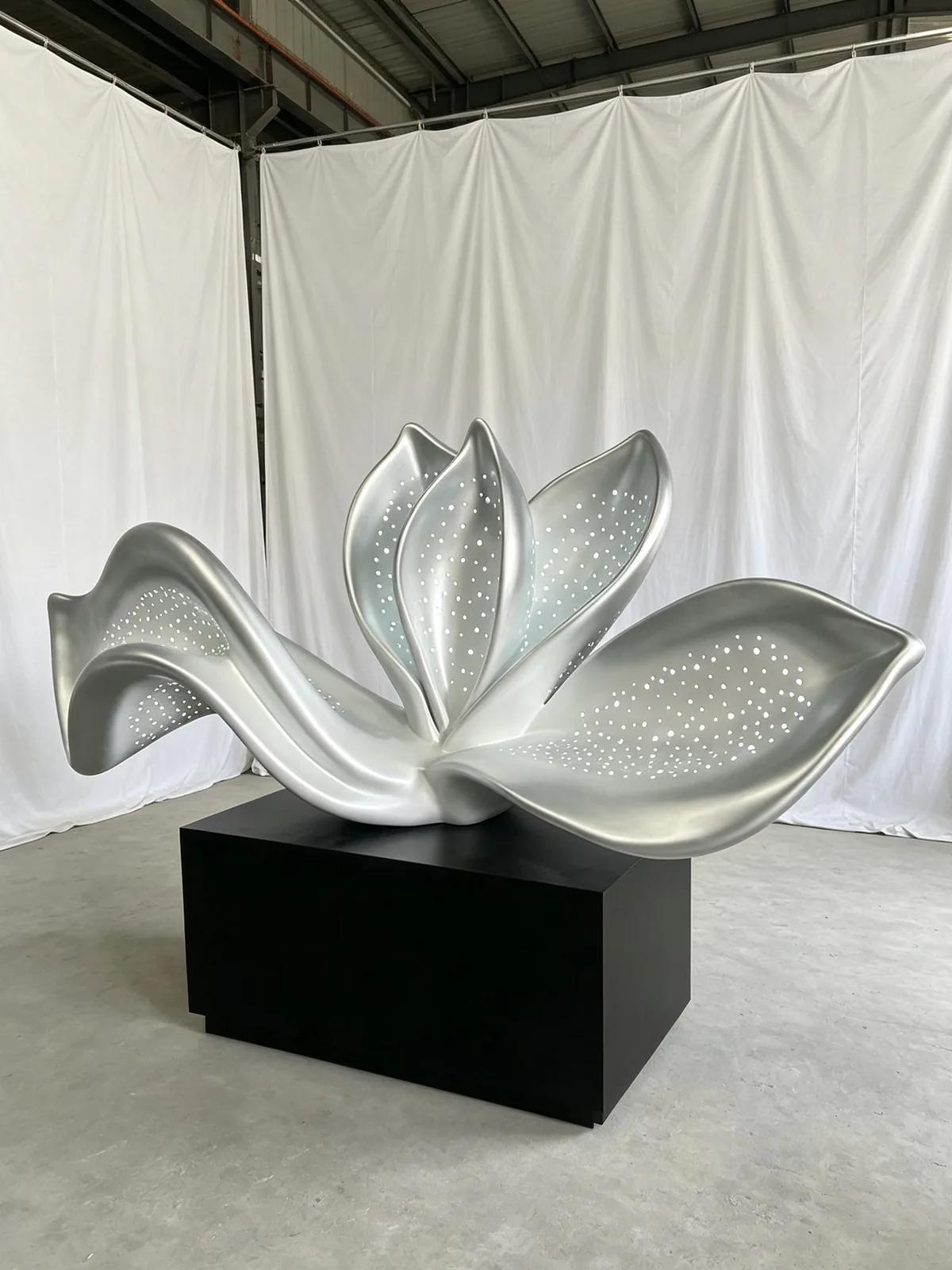
The petal-form production study shows a silver-coloured form, overlapping curves, openings and a black plinth. It is useful for discussing those visible relationships. Its photograph does not establish a botanical species, metal grade, dimensions or a completed venue installation.
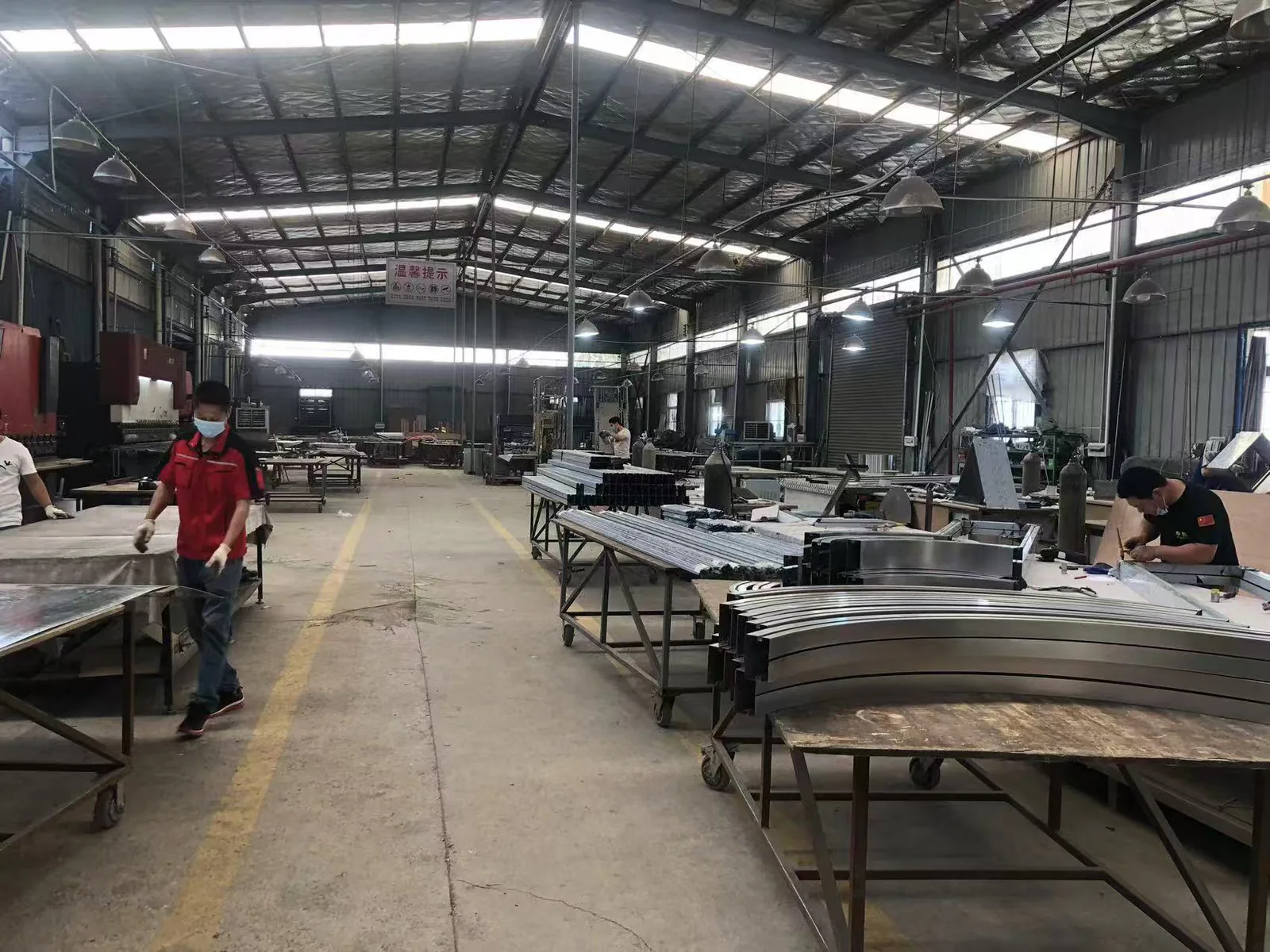
The workshop image of curved components shows parts arranged on tables. Their final project use is not identified in this guide. These records can prompt a more precise request for views of your own proposed petal and stem interfaces; they are not represented as approved flower components or inspection acceptance.
Bring the location into the OEM brief
State whether the proposed work is inside, sheltered or exposed outdoors, and share the destination and site photographs. For outdoor work, identify known water, salt or cleaning exposure for the material review. Record surrounding circulation, reachable projecting parts and the access needed to maintain the piece. The project team must review these conditions for the actual design.
Choose the application route by the intended project use: a hotel garden belongs with hotel and commercial sculpture, while a shared public garden belongs with landscape and public art. For the wider delivery interfaces, use the overseas installation checklist.
Copy these headings into a first inquiry
Complete the known items below and leave the others open for a specific proposal. This is a request for review, not an order or an approved production record.
- Artwork and revision: [to complete]
- Bloom outline, depth and important viewing faces: [to complete]
- Intended overall envelope and base relationship: [to complete]
- Destination, setting and known exposure: [to complete]
- Proposed material, finish and reference needed: [to complete]
- Petal, stem and base questions still open: [to complete]
- Design reviewers, site information provider and delivery constraints: [to complete]
Download the blank flower sculpture OEM brief (TXT)
Copy the relevant completed entries into the project brief, or save the document as a PDF accepted by the existing form. The form does not accept TXT uploads.
Send WEIERYANG your flower sculpture artwork and OEM brief. Include the decisions you want reviewed first. Preparation, quantities, materials and delivery responsibilities are agreed for the actual project; no standard order quantity or turnaround is assumed here.
Frequently asked questions
What should I send for a custom metal flower sculpture OEM review?
Send the current artwork and revision, intended overall dimensions and bloom depth, important viewing faces, the proposed stem and base relationship, destination and setting, and the material or finish questions still open. Identify who can review the design and who can provide the site information.
Can a flower photograph be used as the complete fabrication drawing?
It can explain a visual direction, but may leave side and rear geometry, petal depth, interfaces and dimensions unresolved. Identify the reference source and the decisions still needed, then agree who will develop and review the fabrication information.
Does the petal-form photograph prove that the sculpture is stainless steel?
No. The photograph shows a silver-coloured petal form, visible openings and a black plinth. It does not verify the composition or grade. Material information for a new metal flower sculpture must be specified and supported separately from its appearance reference.
Should the petals, stem and base be ordered as one piece?
Review that choice against the design, intended joins, transport route, positioning and site working area. If separate parts are proposed, identify each interface and agree the assembly and finish responsibilities. No standard section arrangement applies to every flower design.
Does an approved finish sample confirm outdoor suitability?
A finish review covers only its agreed scope. Record what material and surface the sample represents, and keep exposure conditions, material verification, structural interfaces and maintenance review as explicit project decisions. A sample photograph alone does not establish outdoor performance.
Sources and project evidence
This is a buyer planning guide. Published production photographs support only the visible details described in their captions. Proposed review records are not test reports, approved project samples or completed-client case histories. Technical scope and responsibilities must be agreed for the actual project.
- Stainless steel finish specification — IMOA — Supports agreeing a defined surface appearance and visual reference with suppliers. It does not establish material grade, finish performance or compliance for WEIERYANG work.
- Petal-Form Sculpture: Edges, Perforations & Plinth — WEIERYANG — Existing first-party production study describes the visible petal-like form, openings and plinth and its factual limits.
- WEIERYANG factory workshop photographs — Approved factory photo source supports visible curved components on worktables; no final flower application is established.
Explore the related sculpture application and process · Share your drawings and project brief