Custom Character Sculptures from 2D Artwork: An OEM Brief
This guide is for brand teams, attraction designers and retail buyers commissioning a physical character from their own or authorised artwork. Here, OEM means fabrication to an agreed design and project scope. It does not establish ownership of a character, a standard minimum order or a particular production method.
Start with the character features that must survive the move into volume
A flat drawing may make both eyes visible in a turning head, enlarge a hand for expression or hide the meeting point between an arm and body. Those choices can work on a page without defining what the sculpture should look like from another direction. Asking a fabricator to “make it exactly like the image” leaves those decisions unresolved.
Mark the identity features first: the outline of the head, spacing of facial features, posture, distinctive accessories and boundaries between colour areas. Then distinguish fixed brand elements from details the appointed designer may propose. A useful instruction names both the feature and the permitted interpretation: for example, preserve the smile curve while reviewing how the cheek continues around the side.
Use a character-to-volume matrix
The following is a suggested briefing tool, not a technical standard. Complete the relevant rows with your design team. “To be developed” is a better instruction than leaving a missing view to silent interpretation.
On a small screen, scroll the table sideways to read all columns.
| Feature or view | Question to resolve | Useful brief attachment |
|---|---|---|
| Front silhouette | Which head-to-body relationships and outline details define recognition? | Approved front artwork with fixed features marked. |
| Side and rear views | How do the face, costume and colour areas continue beyond the original image? | Approved turnarounds, or an explicit assignment to develop the missing views. |
| Expression | Which eye, mouth and cheek relationships should be retained at the intended viewing height? | Close views with comments tied to named features. |
| Pose and accessories | What is part of the character, what is separate, and which visible junctions need design review? | Pose sheet and a diagram identifying accessory-to-body interfaces. |
| Footprint and base | Where does the figure meet its display base, and what space does the full pose occupy? | Placement sketch showing the overall envelope and proposed base relationship. |
| Colour and surface | Which areas require a physical reference and which surface qualities are still undecided? | Labelled colour references and a request for the appropriate finish review. |
For painted areas, Pantone notes that the substrate, finish and application method can affect the colour match. Agree the physical reference and comparison conditions for your project; a colour code alone is not a promise of an exact painted result.
Review the views your visitors will actually see
A mascot near an entrance may be read from the street, beside the doorway and at close range. A character inside a themed space may also be seen from behind. Identify these views on the placement sketch rather than treating one presentation render as the whole design.
For the design comparison, ask for consistently labelled front, side, rear and selected three-quarter views. Keep a clear distinction between a view intended to explain the form and a rendered venue image intended to communicate atmosphere. Add an eye-level view where the expression is important. Note what is excluded from each review; a good-looking render does not confirm the installed object's physical performance.
A fictional example: the raised-wing character
Consider a fictional brand character shown in a single front illustration, with one wing raised and a small emblem on its chest. This is an invented design-review example, not a WEIERYANG customer project. The front image establishes the pose, but it does not show the rear surface of the wing, the depth of the emblem or the character's back.
A practical brief would assign those missing design decisions, request a side view to compare the wing with the body, and identify the emblem as either a surface graphic or a projecting element for review. It would also show the desired relationship between the feet and base. The team can then comment on named features instead of exchanging incompatible instructions such as “more like the original” and “more three-dimensional”.
Separate appearance decisions from engineering decisions
Accepting the face or pose should not be treated as accepting a support arrangement, fixing detail, electrical interface or installation method. Identify the separate deliverables and the people responsible for reviewing them. If a design adjustment changes an arm, accessory, base or access point, return the affected appearance and interface views for review.
Materials, dimensions, exposure conditions and the fabrication route remain project decisions. A digital colour or a workshop photograph cannot establish the material specification for a new commission. The fabrication evidence guide helps buyers connect requested photographs to components, drawing versions and questions that still need an answer.
Read production photographs for the details they actually show
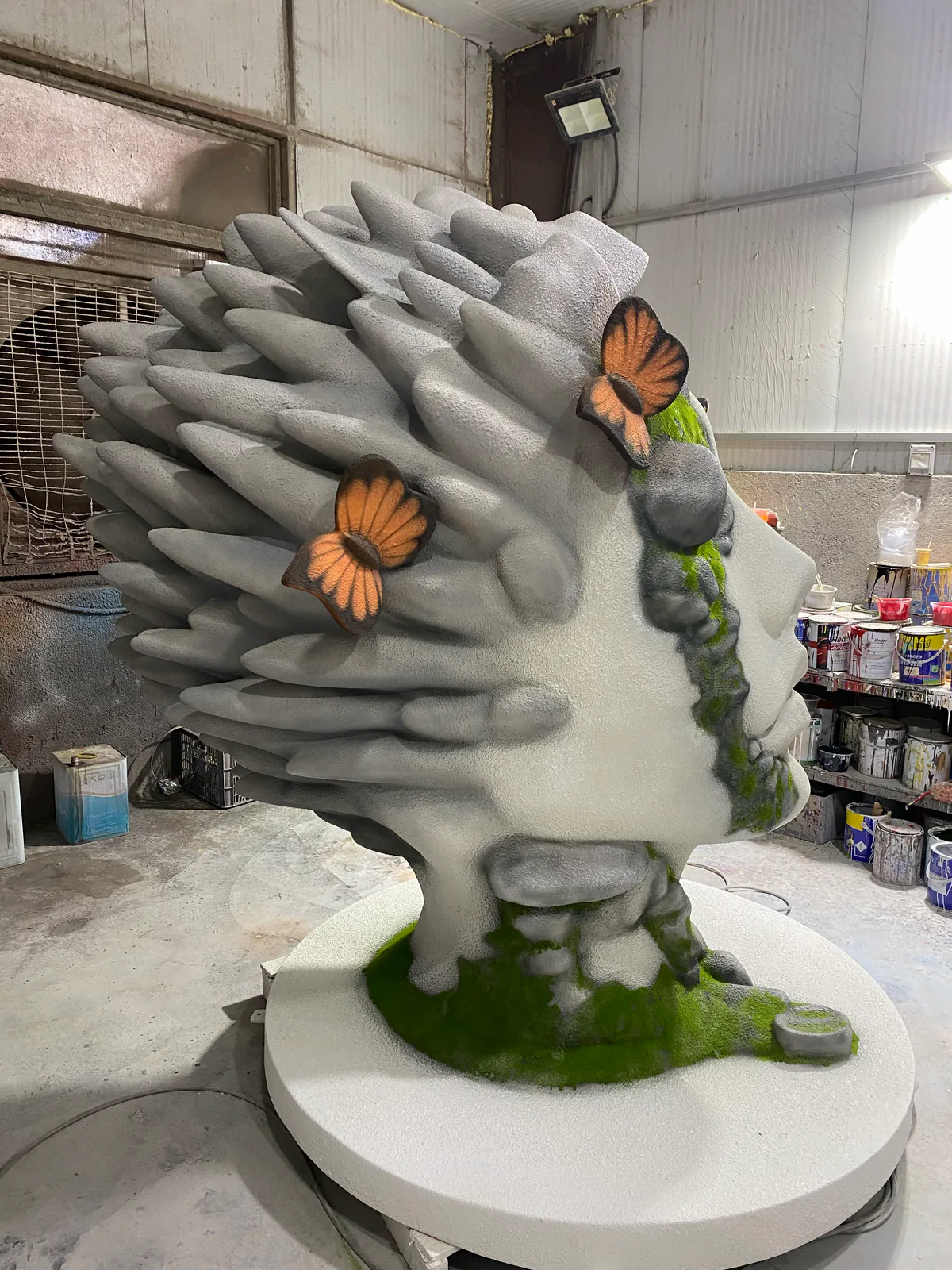
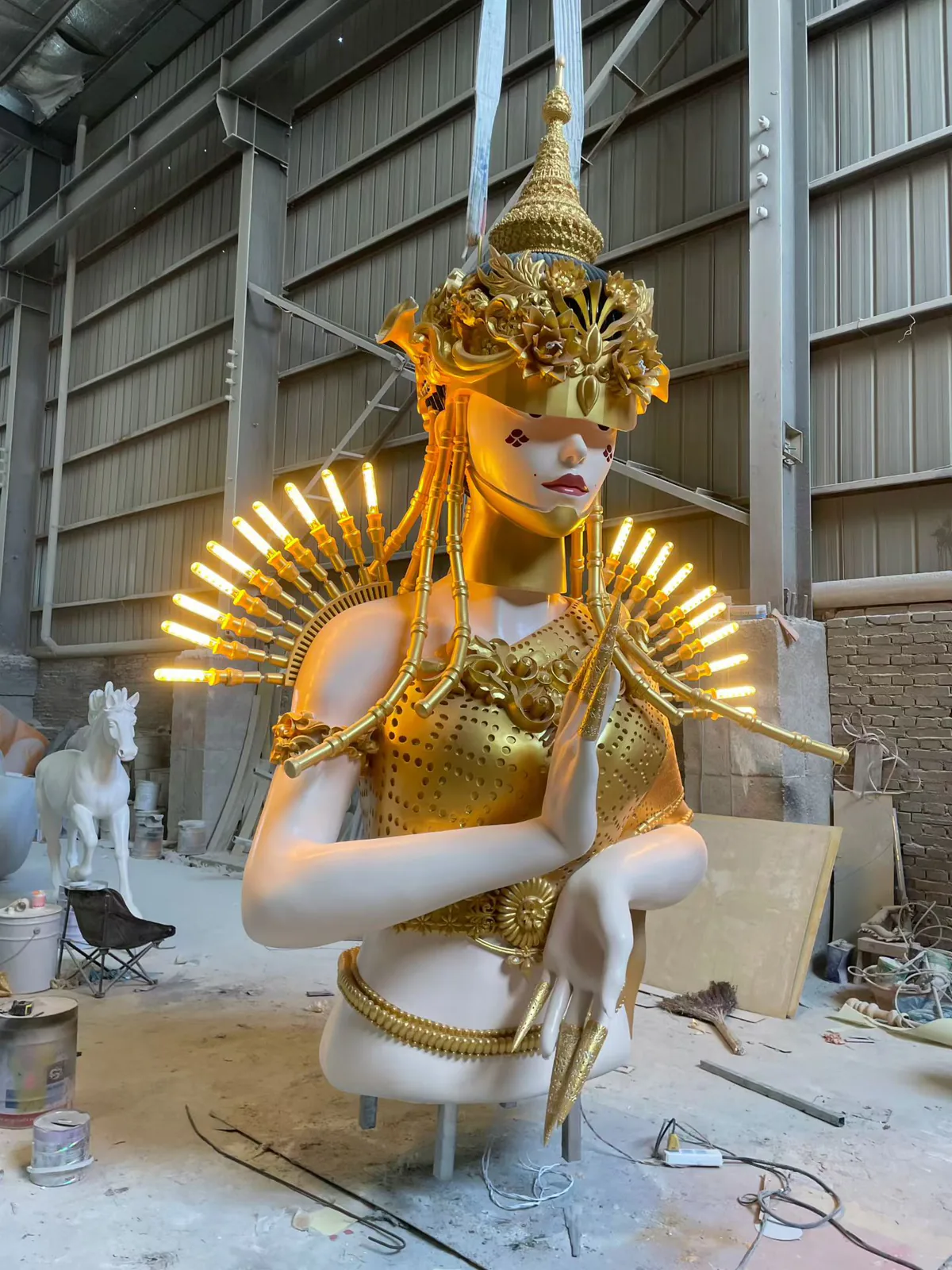
WEIERYANG's illuminated portrait production study shows a decorative portrait and visible illuminated details in a workshop. The leaf-face production study shows how projecting motifs and painted areas relate to a face form. These records can help frame questions about visible detail and adjoining elements.
Neither photograph identifies your character's design solution or proves its reproduction rights, dimensions, material grade or completed venue installation. Use them as references for a conversation about the work, then request evidence tied to your own design.
Prepare the first review package
Bring together the current artwork, the character-to-volume matrix, a placement sketch and a short list of unresolved design decisions. Name the person authorised to comment on the character and the separate reviewers for project interfaces. State the destination and intended use so the scope review starts with the real setting.
For a themed art or character installation, this gives the fabrication discussion a useful starting point without pretending the design is already complete. Send your character artwork and project brief to WEIERYANG and identify the views you have, the views still needed and the decisions you want the first review to resolve.
Frequently asked questions
Do I need to supply a finished 3D file for an OEM mascot sculpture?
A finished 3D file is not the only possible starting point. Share the approved artwork and state which design-development services you need reviewed. Confirm the deliverables, revision scope and reviewers before treating any proposed 3D interpretation as fabrication-ready.
Can a single front-view drawing be enough to request an initial review?
It can start the discussion, provided the missing information is explicit. Mark side, rear, depth and interface decisions as open, and agree who will develop them. Do not treat a front-view image as a complete specification for an object seen from several directions.
Can I request a sculpture based on a character found online?
Use original artwork or artwork you are authorised to commission. Identify the artwork source and permitted project use, and resolve any uncertainty with the appropriate rights holder before requesting reproduction. A public image or another sculpture photograph does not establish permission.
Does approval of a 3D render also approve the sculpture for installation?
Keep those decisions separate. A render may support a defined appearance review, while the physical design, supports, fixings, site interfaces and installation responsibilities require their own agreed information and reviewers.
Sources and project evidence
This is a buyer planning guide. Published production photographs support only the visible details described in their captions. Proposed review records are not test reports, approved project samples or completed-client case histories. Technical scope and responsibilities must be agreed for the actual project.
- Illuminated portrait sculpture fabrication — WEIERYANG production study — First-party evidence for visible decorative portrait form and illuminated details in a workshop, within its stated fact boundary.
- Leaf-face sculpture fabrication — WEIERYANG production study — First-party evidence for visible face form, projecting motifs and painted detailing, within its stated fact boundary.
- Tourism & Themed Art Installations — WEIERYANG — First-party service context for reviewing approved artwork and project-specific OEM fabrication scope; no fixed MOQ, grade, lead-time or rights claim.
- How do I get paint in a Pantone color? — Pantone Support — Pantone notes that paint formulations, substrate, finish and application method can affect the result; no exact colour match is claimed.
- WIPO copyright FAQ — Online publication does not by itself establish permission; general rights-awareness only, no project-specific legal opinion.
Explore the related sculpture application and process · Share your drawings and project brief