How to Brief a Roundabout Sculpture for Day and Night Views
One silhouette in three lighting conditions
From the WEIERYANG project archive. Select a photograph for the full view.
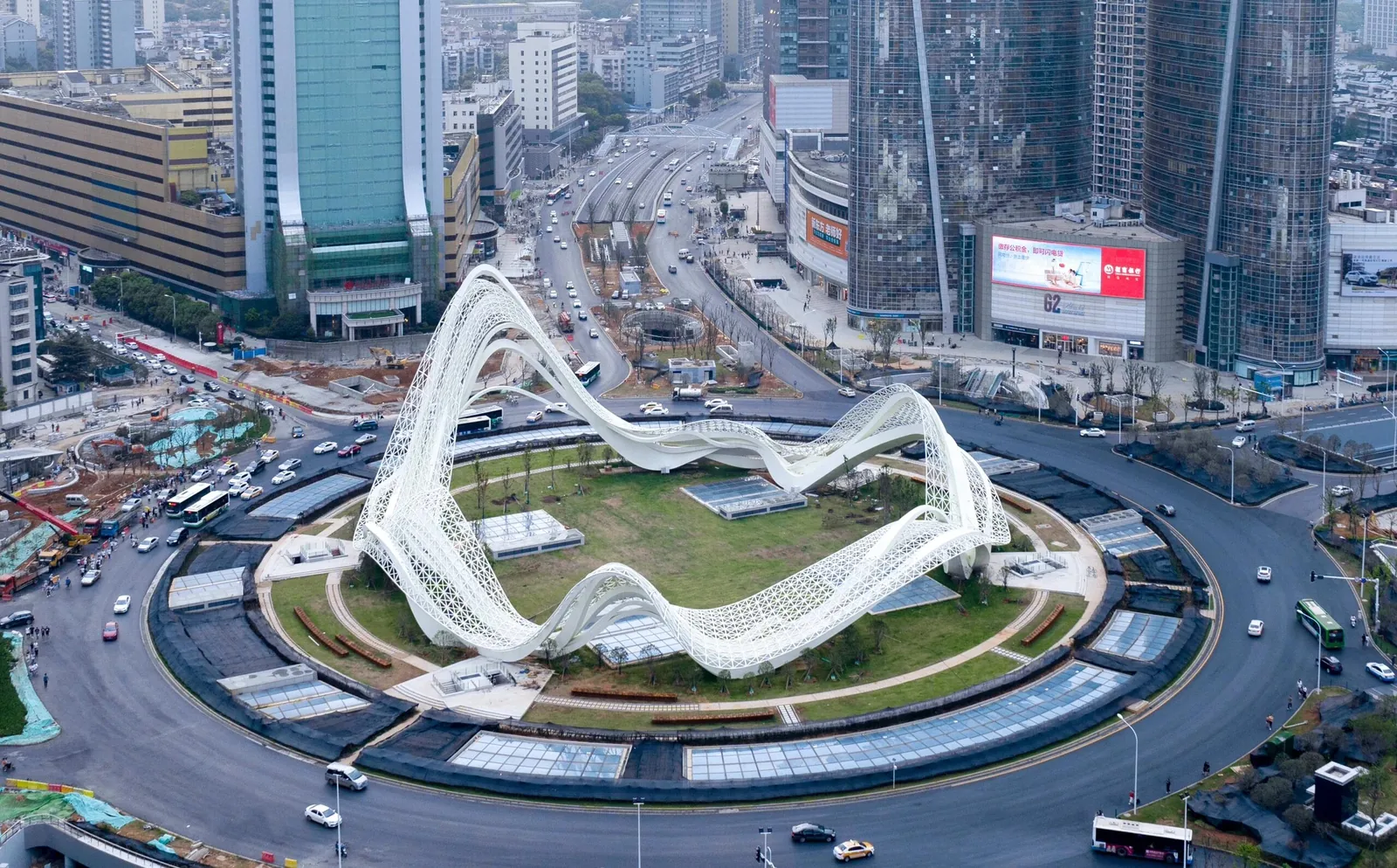
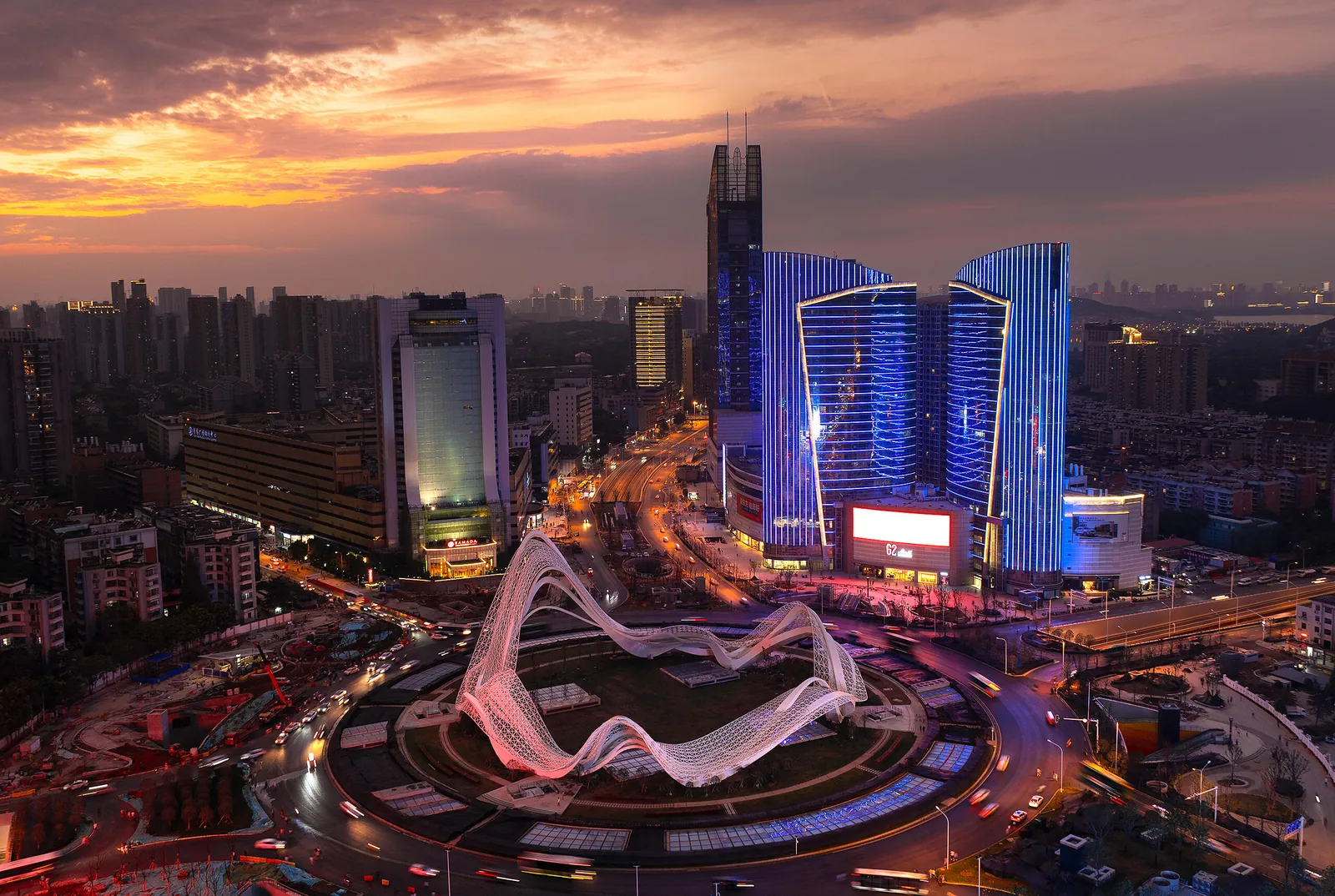
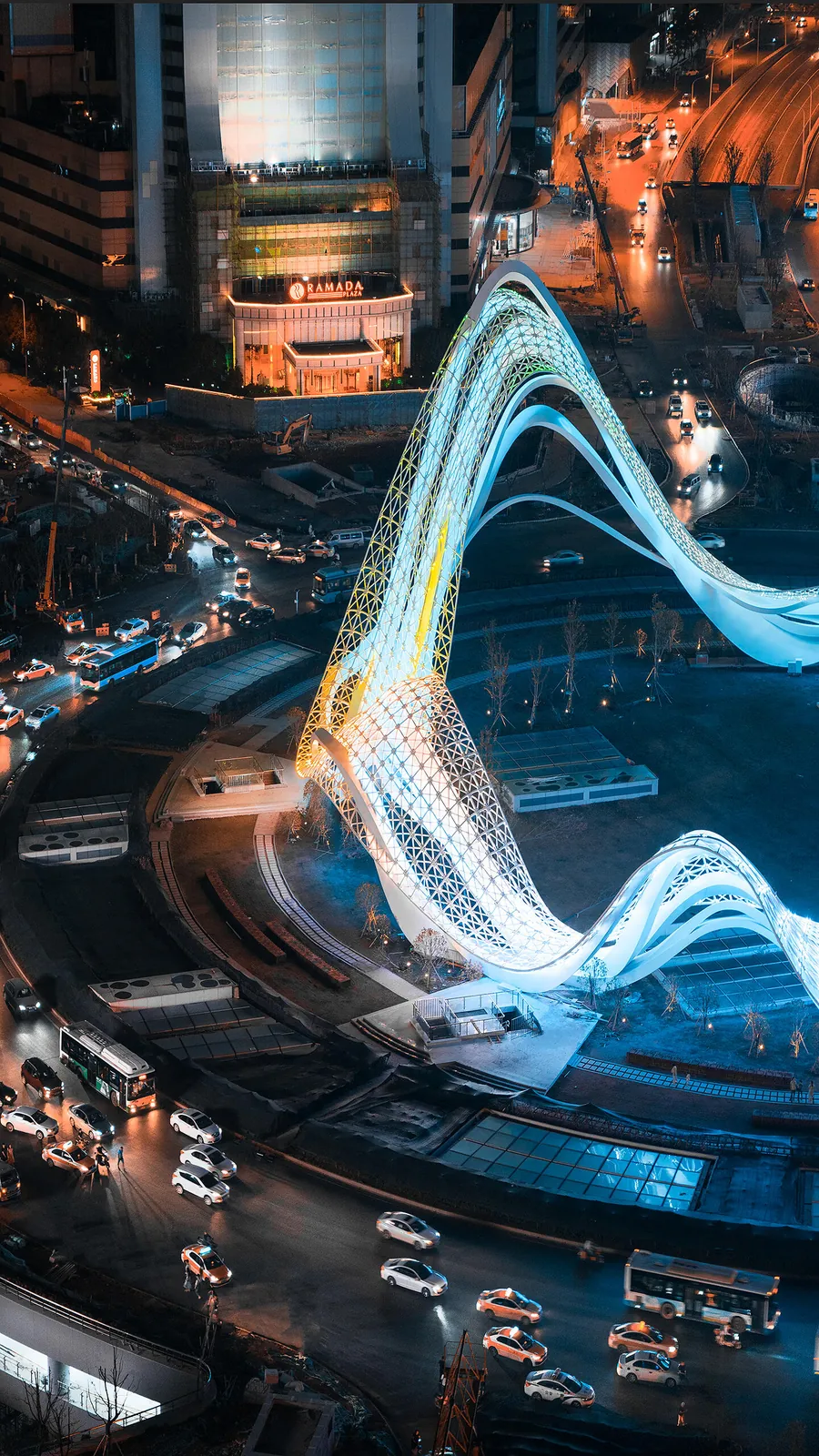
Build an approach sheet from the actual site
Ask the site team for existing survey photographs taken from an appropriate public viewpoint or supplied by the road authority. Number the approaches on a plan. Alongside each photograph, note the background, the visible planting and the intended focal point. An aerial image explains the overall geometry. A lower approach image answers whether two peaks overlap from the viewer’s position.
Compare the lit outline with the unlit outline
Draw a single line over the dominant crest in the daytime view. Repeat the exercise on a night visual. If the night drawing picks out the base instead of the crest, ask for a second lighting option before freezing the rib layout. Agree whether the quotation covers fixtures, internal access, controls, drivers and commissioning, and identify who supplies the incoming power.
Split public-site review from fabrication sign-off
Send one drawing revision to the landscape team, the fabricator and the party responsible for local road review. Ask the local team to define sightline constraints, planting envelopes and maintenance access. Record responsibility for foundations, lifting and electrical work by name or role. The project can then compare quotations against a common boundary, even where local approvals are still pending.
Prepare the roundabout landmark RFQ
Approaches and marked photographs [ ]. Main silhouette feature [ ]. Day and night intent [ ]. Planting and site constraints from local reviewer [ ]. Please list sculpture, lighting equipment, service access, packing, installation interfaces and exclusions separately.
Buyer questions
Is an aerial image enough to approve a roundabout sculpture?
Use it to understand the island and overall footprint. Add approach-level photographs with the background and planting visible. Those views let the design team judge overlapping peaks and gaps from the intended viewing positions.
Who should confirm road sightlines and night lighting?
Identify the responsible local road reviewer and lighting designer in the brief. Ask them to provide applicable site constraints and approval requirements, then give those written inputs to the fabricator for coordination.