Brass vs Bronze Sculpture: OEM Material & Finish Brief
A material name can sound precise while leaving several decisions unresolved. This buyer guide turns “brass,” “bronze” or “gold-coloured” into a clear discussion of the material being proposed, the appearance being requested and the evidence still needed.
1. Decide whether you are specifying a material or an appearance
A request for a custom brass statue is different from a request for a bronze sculpture with a gold-coloured appearance. Start by saying which part is fixed. If the design team has selected an alloy, record its full designation. If it has selected only a colour and form, keep the base material undecided and ask for a clearly described proposal.
OEM here means fabrication to approved client drawings with project-specific scope. This guide helps turn a visual request into a material-and-finish brief. It does not establish the composition of a photographed work or select an alloy for every project.
2. Treat brass and bronze as starting names, then ask for the designation
Brass commonly describes copper-zinc alloys. In a narrower metallurgical use, bronze describes copper-tin alloys, while sculpture and trade usage can apply “bronze” to a wider range of copper alloys. Getty’s technical guidance on copper-alloy terminology explains why the name alone can be ambiguous. Ask what the supplier means by it and which material designation is actually proposed.
When a drawing or quotation uses a broad term such as copper, bronze or 铜, retain the original wording beside the proposed English material description until both parties understand the same material. Translation, a finish name and a catalogue label should not silently become the alloy specification.
3. Keep the base material and the surface treatment on separate lines
The base material describes what the component is made from. The surface treatment describes the proposed surface process and any additional layers. The appearance reference describes the colour, gloss and texture the buyer wants to see. One line should not stand in for all three.
Ask for a separate material description where the visible body, support or plinth uses a different material. Also ask what construction is proposed rather than assuming that every sculpture is solid or that every form uses the same making method. This is a scope question for the new design, not a claim about the work pictured here.
4. Use real photographs to describe appearance, not to certify an alloy
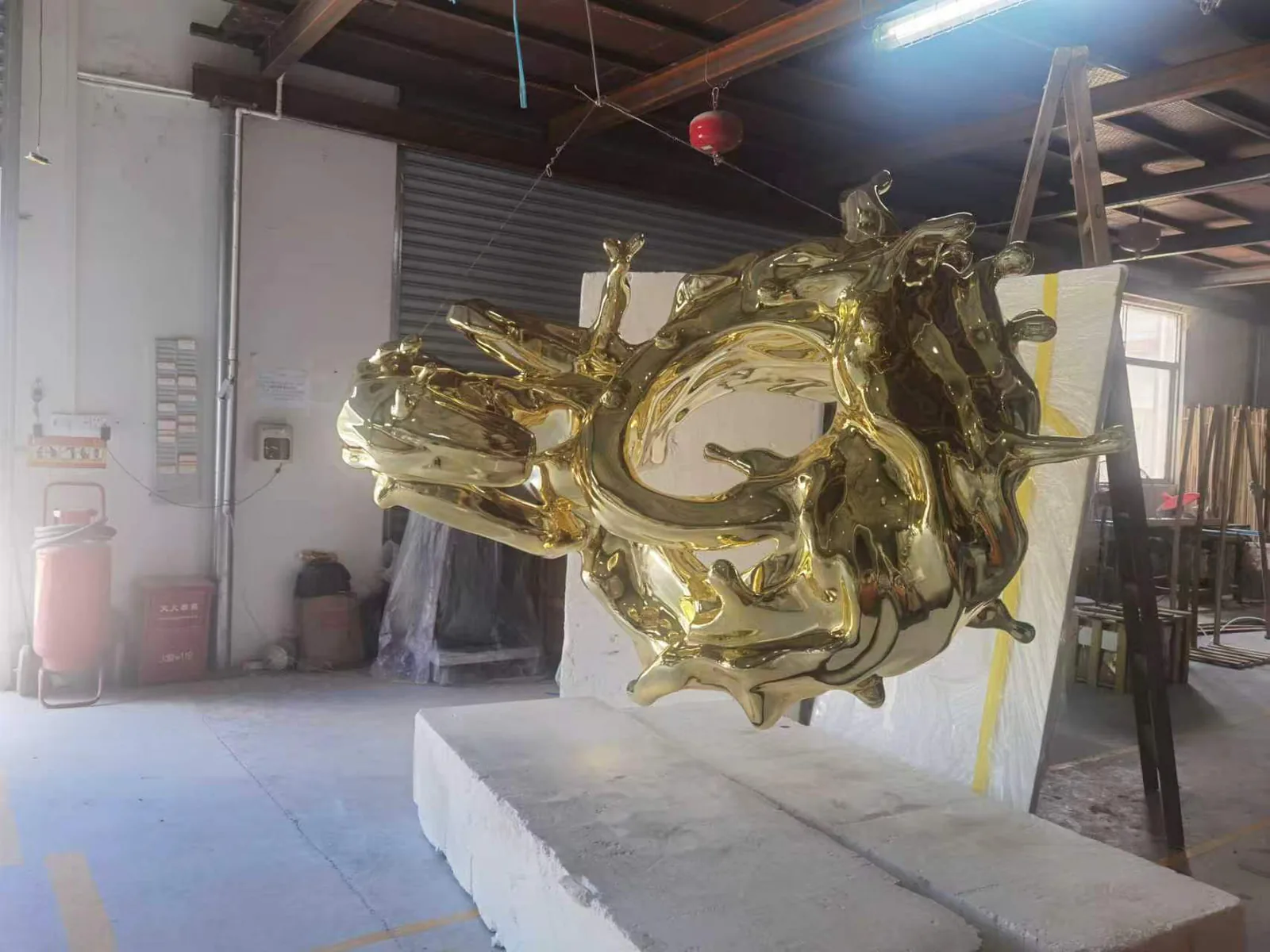
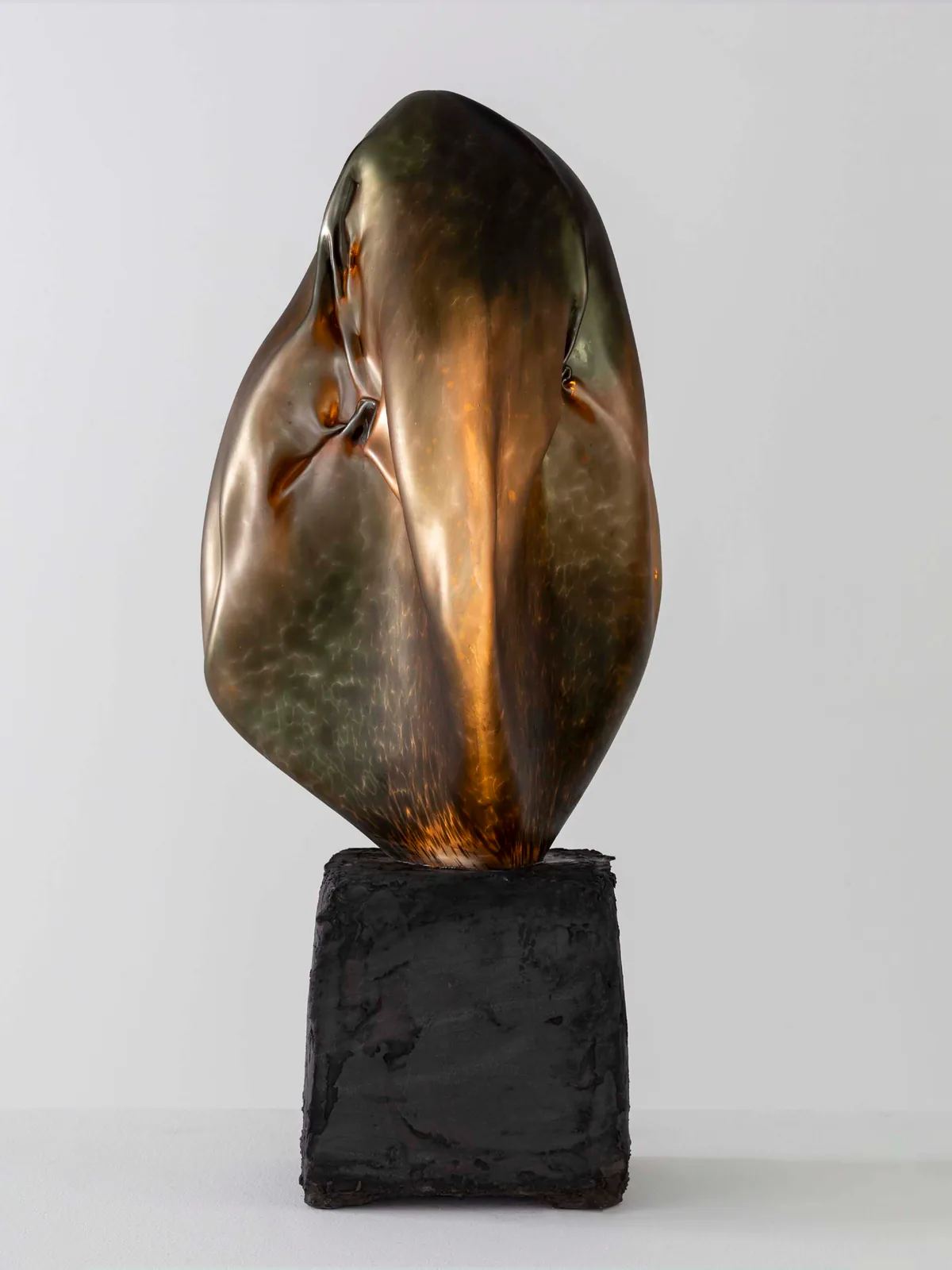
The two WEIERYANG production photographs on this page are useful visual references: one shows gold-coloured reflective curves, the other a warm-coloured form on a textured plinth. They do not establish brass, bronze, an alloy designation or a particular surface process.
Record the feature you want the team to discuss—such as the reflected lines or the relationship between form and base—then request the material-and-finish proposal separately. Follow the linked production studies for the limits of each photograph. A visual reference also does not establish permission to reproduce an existing design.
The Canadian Conservation Institute’s metal-identification note also explains that colour alone cannot reliably distinguish alloys. Its archaeological context is background for this identification limit, not a testing procedure for a new order.
Read the gold-coloured abstract production study · Read the warm-coloured form and plinth study.
5. Use three distinct columns in the material-and-finish brief
Keep the buyer’s request, the supplier’s proposal and the confirmation status visibly separate. “Requested” records intent. “Supplier proposed with supporting record” records an offer and the evidence actually available. “Confirmed or open” records what the project team has resolved and what still needs an answer.
An empty or unavailable record should stay open. A material document is useful only within the scope it identifies; a finish photograph is useful for appearance, not as a substitute for a material record. Agree the needed evidence and its availability before treating the material line as settled.
Intended location and exposure
- Requested
- Describe indoor or outdoor use, water or coastal exposure, visitor contact and cleaning access.
- Supplier proposed with supporting record
- State which site assumptions the material-and-finish proposal uses; identify any missing information.
- Confirmed or open
- Open — site assumptions to be checked.
Base material and alloy designation
- Requested
- State the required material designation, or say the substrate remains undecided. Keep a colour request separate.
- Supplier proposed with supporting record
- Name the proposed substrate and alloy designation where relevant; identify the supporting material record and its scope.
- Confirmed or open
- Open — no alloy is selected by this worksheet.
Construction and separate components
- Requested
- Describe the required overall form and ask which visible parts, internal supports and base elements need separate material descriptions.
- Supplier proposed with supporting record
- State the proposed construction and identify the material assigned to each relevant component; note what remains unknown.
- Confirmed or open
- Open — component boundaries to be agreed.
Material-record coverage
- Requested
- Ask what records can be supplied and which component or supply stage they identify.
- Supplier proposed with supporting record
- Give the record reference, issuer, date and relationship to the proposed material or part; explain limitations or unavailable evidence.
- Confirmed or open
- Open — a record name is not itself a confirmation.
Surface treatment
- Requested
- Describe the intended finish effect without using it as the substrate specification.
- Supplier proposed with supporting record
- Name the proposed surface process, any additional surface layers and what is included; leave unselected routes open.
- Confirmed or open
- Open — process and scope to be confirmed.
Appearance reference
- Requested
- Identify the colour, gloss, texture and important viewing conditions the buyer wants to review.
- Supplier proposed with supporting record
- Identify the proposed reference or sample and the form, surface and lighting it represents; list what it does not represent.
- Confirmed or open
- Open — appearance and material are separate decisions.
Maintenance and repair information
- Requested
- Describe visitor contact, cleaning conditions and the information the site operator needs.
- Supplier proposed with supporting record
- State the proposed care and repair information for this material-and-finish route, including any unresolved conditions.
- Confirmed or open
- Open — project-specific care assumptions to be reviewed.
Alternative proposal
- Requested
- Say whether alternatives are invited; name the priorities that must stay comparable.
- Supplier proposed with supporting record
- List each changed material, surface process, appearance reference or care assumption separately; identify exclusions and evidence gaps.
- Confirmed or open
- Open — an alternative is a proposal, not an accepted substitution.
Download the blank material-and-finish brief (TXT)
Edit the blank TXT locally. Downloading it does not send an inquiry. Paste relevant details into the existing project brief; a longer file can be exported as a PDF for attachment.
6. See how an ambiguous “gold bronze” line can be clarified
Fictional teaching example — not a WEIERYANG quotation, material record or completed project. An initial line reads: “Gold bronze sculpture; material and finish included.” That wording leaves the buyer unable to tell whether “gold” describes colour, a surface layer or the material itself.
Rewrite the request as separate open questions: base material and alloy — not yet selected; surface process — supplier to propose and describe; appearance — warm gold-coloured direction, sample to be agreed; supporting material record — supplier to identify availability and scope; alternative — list separately with all changed assumptions. No alloy or treatment becomes confirmed simply because this example names the question.
This gives both sides a useful next reply: a defined proposal with visible gaps, instead of another image or a repeated material label. It also prevents an appearance preference from being mistaken for an accepted material substitution.
7. Compare alternatives by what changes, not by the headline name
If a supplier offers an alternative, ask which lines change: the substrate, component construction, surface process, appearance reference, care information or supplied evidence. Keep the original request alongside the alternative so the design and procurement teams can see the difference.
Do not assign a universal price, strength or durability order to the words brass and bronze. A useful quotation comparison needs the actual proposed design, material, finish and included work. Use the complete sculpture quotation scope checklist for drawings, structure, packing, freight and local installation responsibilities.
8. Review the proposal against the site and future care
Provide the intended location, exposure, visitor contact and cleaning access. Ask how the proposed material-and-finish route responds to those facts, what assumptions remain and what care information the operator will receive. “Outdoor bronze” or a warm-coloured sample is not a complete site specification.
Where the project is still choosing between material families, use the bronze, stainless steel and stone comparison. For a copper-alloy direction, the bronze sculpture project route connects the visual brief to patina, touch and delivery questions. Neither page replaces the project-specific material-and-finish proposal.
9. Bring the open questions into the project brief
WEIERYANG is a sculpture studio and manufacturer based in China. Send drawings you are authorised to commission, the site and use, approximate dimensions, destination and the material-and-finish questions still open. The team can review the proposed scope without treating a photograph as a finished specification.
Use the existing private project brief to share those details. Once a proposal is ready for review, the drawing and sample approval guide helps record the decision and its limits. The blank brief here is preparation; it does not submit an order or approve a material.
After choosing the alloy and finish, use the outdoor bronze sculpture care and OEM handover checklist to specify condition photos, written maintenance instructions and who will manage the work on site.
Brass and bronze sculpture quotation questions
What is the difference between brass and bronze sculpture?
Brass commonly refers to copper-zinc alloys; bronze can mean copper-tin alloys or be used more broadly in sculpture and trade descriptions. For an OEM quotation, ask for the actual proposed material designation and the scope of the supporting records, then specify finish and appearance separately.
Does a gold-coloured sculpture photograph prove that it is brass?
No. The photographs here establish visible colour and form, not material composition or a surface process. Ask for the proposed base material, surface treatment and appearance reference on separate lines.
What should I do if a drawing only says copper, bronze or 铜?
Keep the original term visible and ask the supplier to identify the intended material and proposed designation. Leave the line open until both parties are referring to the same material; do not let translation or a colour description settle it by accident.
Is brass or bronze always the better choice for an outdoor sculpture?
There is no single choice from the name alone. Review the actual proposed material, construction and finish against the site, exposure, visitor contact and maintenance requirements. Keep unconfirmed assumptions visible and agree the project specification before production.
What should a custom brass or bronze sculpture quote state?
State the proposed base material and designation, relevant component materials, available supporting records and their scope, surface process, appearance reference and maintenance assumptions. List alternatives and exclusions separately. Use the wider RFQ scope checklist for engineering, packing, freight and local installation responsibilities.
Sources and evidence boundaries
Getty explains the varied meanings of copper-alloy names. CCI’s archaeological conservation note supports only the limit of colour-based identification here. These are background references, not WEIERYANG material records, inspection reports, certifications or a new-production testing protocol. The brief and fictional example are editorial procurement tools.