How Do You Size a Life-Size Horse or Deer Sculpture?
What does “life-size” mean for a horse?
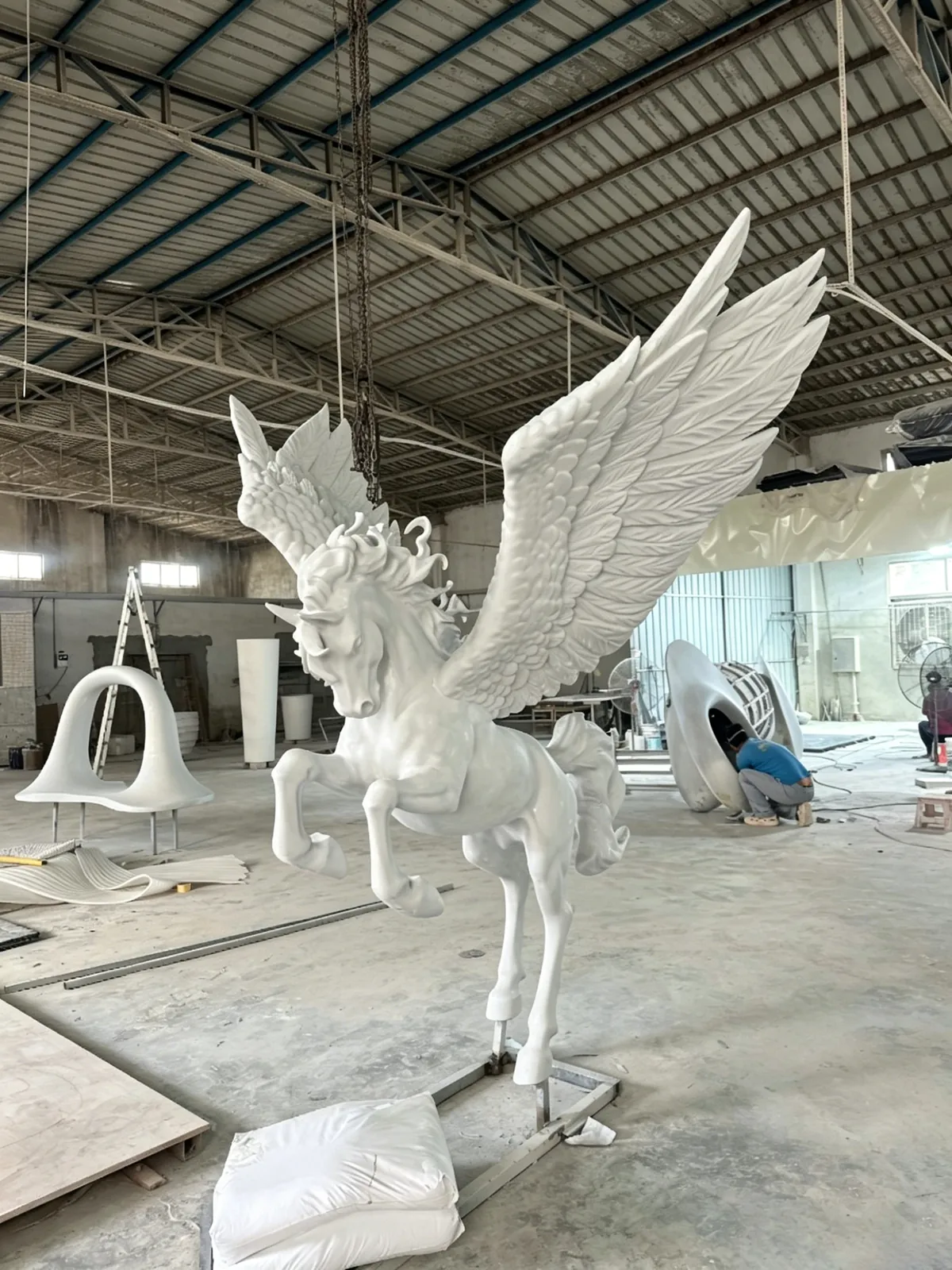
A standing horse’s height is measured at the withers, the ridge where the neck meets the back. Iowa State University’s equine guidance identifies that point on a standing horse. For a sculpture brief, use a known horse or a measured reference to establish the body scale. A head raised in profile or a wing lifted above it changes the top of the artwork. See the equine measurement illustration.
The workshop photograph shows a rearing winged horse. A designer who writes only “two metres high” could mean the body size in a standing reference, the top of a wing, or the distance from the finished floor. Draw an arrow with a start and end point beside the number. Give wingspan its own line on the brief.
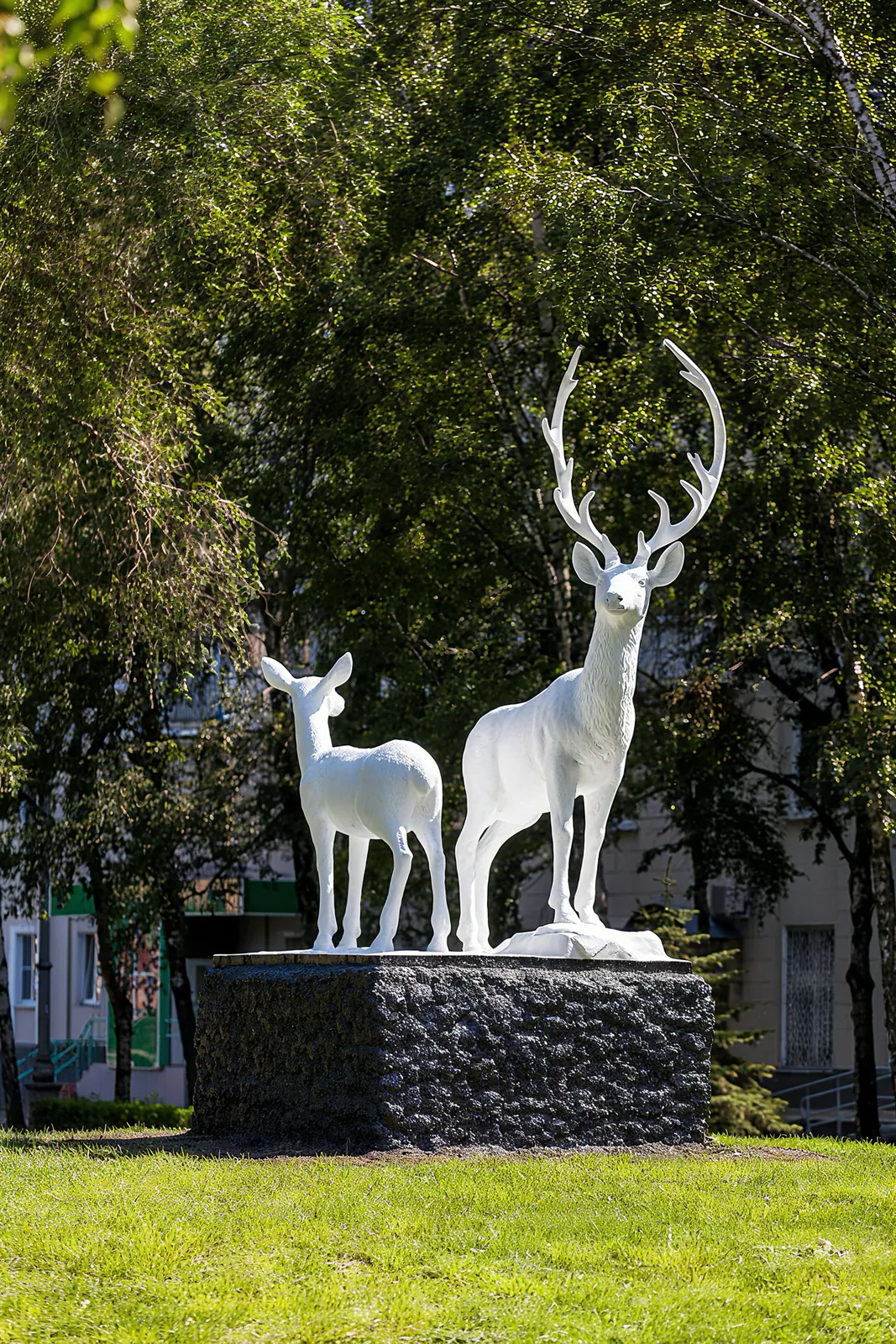
How should you describe a deer pair?
In the outdoor photograph, the antlers extend well above the neighbouring animal. Identify each figure on the drawing. Give each a body dimension, then add the tip height and the distance between the two animals from a named point on each. The gap seen from the visitor path can disappear from another angle, even when both figures fit on the plinth.
On a small screen, scroll the table sideways to read all columns.
| Drawing mark | Horse example | Deer-pair example |
|---|---|---|
| Body scale | Withers height on the standing reference | Shoulder level for each figure in the chosen pose |
| Overall envelope | Top of raised wing, outer width and front-to-back reach | Highest antler tip, total width of the pair and depth |
| Placement | Front arrow and footprint on the proposed base | Labelled gap between figures and the main visitor viewpoint |
Can you start from a photograph?
Send a side view and a three-quarter view of the same subject when available. Identify one known length and which traits need to survive simplification. If you have a single photograph, circle the visible details you care about and identify the parts the sculptor can propose. Ask to review the proposed hidden side before the model is signed off.
Make the size line in the quote unambiguous
For a themed entrance, a useful request would read, “Match the body scale in the side reference. Keep the rearing pose. On the proposal, label the highest point, widest point and projection towards the path. Quote the base separately and show the artwork and base together in a front elevation.” Include the delivery city and whether visitors can approach from more than one side.
Download the animal sculpture size sheet (CSV)
Frequently asked questions
Does life-size include the pedestal?
Specify the artwork height above its support and the total installed height from the finished ground. Listing the pedestal on its own line makes the two figures easy to compare.
Which horse dimension matters for a rearing sculpture?
Use a standing reference to agree body scale, then measure the proposed rearing pose to its highest and widest points. Include front-to-back projection and name the main viewing side.
How do I quote a pair of deer statues?
Give the supplier one labelled reference per deer, a plan showing their spacing and a front view with the tips of the antlers included. State whether the base is shared or separate.
Further reading
- Iowa State University Extension and Outreach, equine measurement procedure — Identifies the withers as the height reference on a standing horse.
Tourism & Themed Art Installations · Send an animal reference and scale for review